 Save
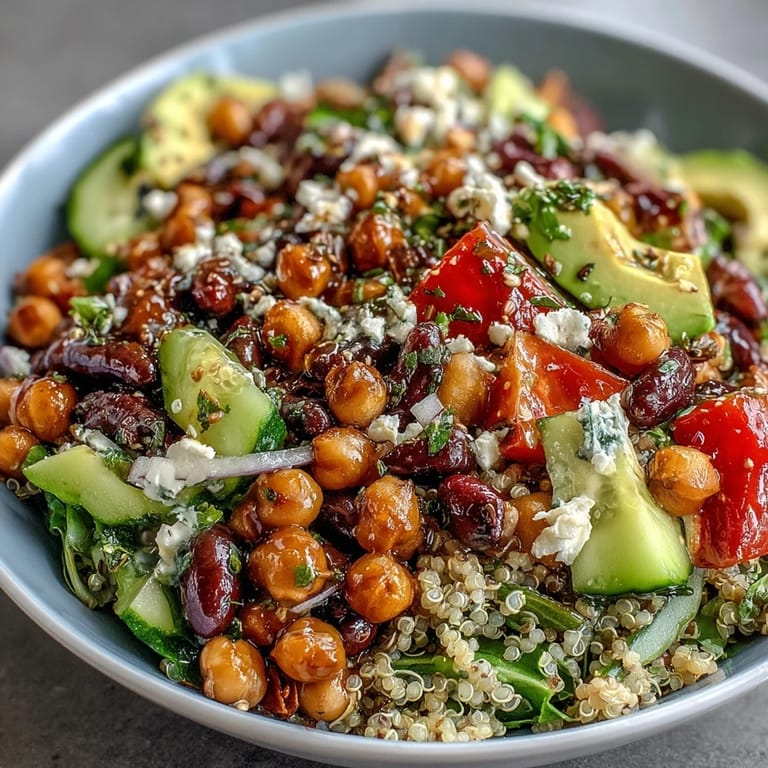
Save There's something magical about assembling a bowl that feels simultaneously indulgent and virtuous, and I discovered that magic on a Tuesday afternoon when I needed lunch but didn't want to sacrifice flavor for nutrition. I'd grabbed whatever vegetables were lingering in my crisper drawer—some cherry tomatoes, a sad cucumber, half a bell pepper—and three cans of beans from the pantry, thinking I'd just toss them together with some leftover quinoa. What emerged was so vibrant and satisfying that I've been making variations of it ever since, each time discovering new combinations and realizing how forgiving and flexible this bowl truly is.
I made this for a friend who'd mentioned feeling stuck in a salad rut, and watching her eyes light up when she tasted it reminded me that simple food done thoughtfully can shift someone's entire weekday mood. She said it was the kind of bowl that made her actually want to eat vegetables instead of feeling obligated to, and I've thought about that moment every time I make it since.
Ingredients
- Black beans: Use canned for convenience but give them a good rinse to remove excess sodium and starch, or cook dried ones if you have time.
- Chickpeas: These add a slightly nutty flavor and creamy texture that balances the earthier black beans beautifully.
- Kidney beans: The third player brings a firmer bite and deeper color to the mix—don't skip this layer of complexity.
- Quinoa: This grain provides complete protein on its own, making the bowl genuinely filling without any meat or dairy.
- Cherry tomatoes: Halve them lengthwise to catch more of the dressing, and choose ones that smell sweet at the stem.
- Cucumber: Dice it just before assembly to keep it crisp, and if it's waxy, peel it first for better texture.
- Red bell pepper: The sweetness cuts through the earthiness of the beans, and the color makes the whole bowl more appetizing.
- Fresh greens: Baby spinach wilts slightly from the warm grains and dressing, creating a gentle transition of temperatures.
- Avocado: Add this at the very end or even when plating each bowl to prevent browning and keep it creamy.
- Red onion: Slice it thin so it provides a sharp, oniony bite without overwhelming the other flavors.
- Olive oil: Use one you actually like tasting, since it's the backbone of the dressing.
- Lemon juice: Freshly squeezed tastes entirely different from bottled, and it's worth the two minutes of effort.
- Apple cider vinegar: This adds subtle sweetness and complexity that regular vinegar can't match.
- Dijon mustard: It emulsifies the dressing and brings a gentle mustard warmth rather than a sharp punch.
- Maple syrup or honey: Just a teaspoon balances the acid and prevents the dressing from tasting too sharp.
- Cilantro or parsley: Fresh herbs elevate this from tasty to memorable, so don't treat them as optional.
- Toasted seeds: These add crunch and nutrients, but taste them first to make sure they're not rancid.
Tired of Takeout? 🥡
Get 10 meals you can make faster than delivery arrives. Seriously.
One email. No spam. Unsubscribe anytime.
Instructions
- Gather and prep your vegetables:
- Wash everything first, then work through your cutting board systematically—halve tomatoes, dice cucumber, chop pepper, slice onion thin, and tear spinach if needed. Having everything ready before you start mixing makes the actual assembly feel effortless and prevents any vegetable from sitting around long enough to start oxidizing.
- Build your dressing:
- In a small bowl, whisk olive oil with lemon juice and vinegar first so they start emulsifying, then add mustard and maple syrup to create a smooth, glossy mixture. Taste it before adding salt and pepper—you might find you need less salt if your beans were already seasoned.
- Create the base:
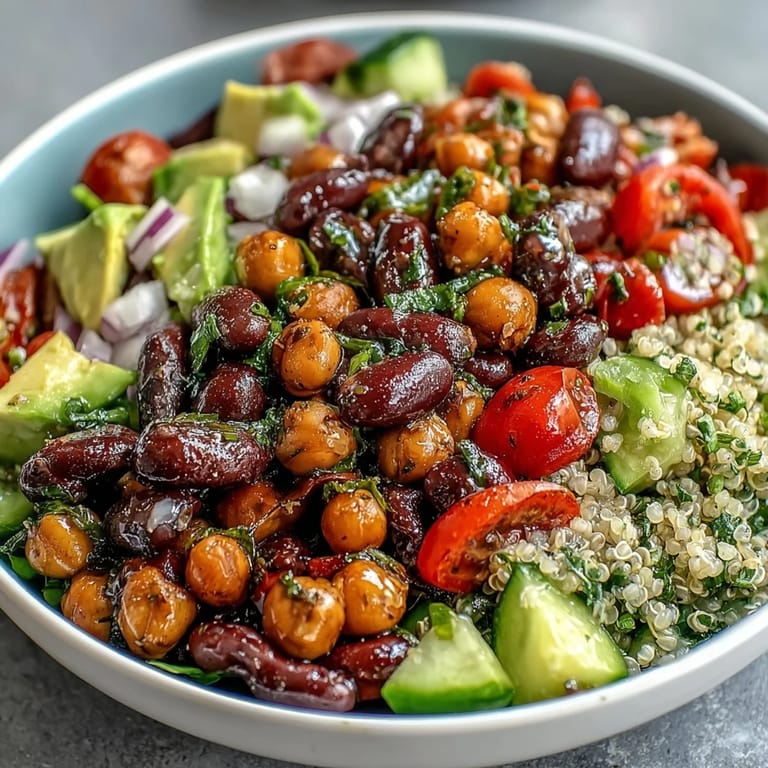
- In a large bowl, combine all three types of beans with your raw vegetables and greens, stirring gently so you don't crush anything. The variety of textures and colors at this point is part of what makes the bowl so appealing to look at and eat.
- Add your grain:
- Fold in the cooked quinoa carefully, letting some of it nestle into the vegetables rather than stirring it all into uniformity. If the quinoa is still warm, it'll absorb the flavors of the vegetables around it.
- Dress everything:
- Pour the dressing over the bowl and use a gentle hand to toss everything together until each component glistens slightly with dressing. Don't go overboard—you want the vegetables to stay distinct, not turn into a mushed salad.
- Plate and finish:
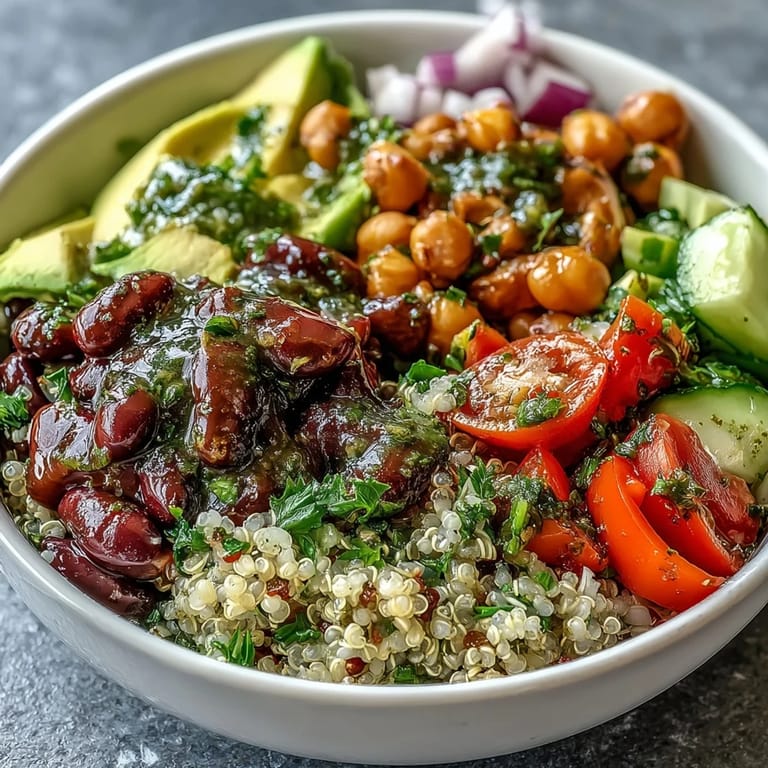
- Divide the mixture among serving bowls and arrange avocado slices on top of each one, letting them be the final beautiful touch. Sprinkle with fresh herbs and toasted seeds right before serving so they stay crispy and don't absorb any moisture.
 Save
Save I think the moment this dish stopped being just a lunch and became something meaningful was when my sister, who's perpetually on some diet, asked for the recipe not as a health obligation but because she genuinely wanted to make it again. That's when I realized I'd created something that transcends the usual healthy eating guilt and just becomes food you want to eat.
Flavor Balance and Why It Matters
The genius of this bowl lies in how it combines opposing elements—creamy beans with crisp vegetables, earthy grains with bright acids, sweet maple with sharp mustard—and somehow achieves harmony rather than chaos. Every spoonful should taste different depending on which components you catch, and that's intentional design, not accident. I've learned to taste the dressing on its own before it goes into the bowl because that ten seconds of tasting can mean the difference between a bowl that tastes alive and one that tastes like someone's idea of what healthy food should taste like.
Meal Prep Magic and Real-Life Timing
The reason I keep coming back to this recipe is that it's actually better on day two or three than it is fresh, which is almost never true for vegetable-based dishes. The dressing penetrates everything, the flavors marry together, and somehow it tastes more cohesive while still maintaining the textural contrast that makes it interesting. I've found that keeping the avocado separate and adding it only when you're ready to eat prevents sogginess and keeps things fresh-feeling even if the bowl has been in the refrigerator for three days.
Variations That Keep This From Getting Stale
Once you understand the basic structure—three beans, one grain, a rainbow of vegetables, a proper dressing, and a finishing touch—you can improvise endlessly based on seasons and what's in your kitchen. In summer I add raw corn and extra herbs; in winter I sometimes roast the vegetables first for a warmer, deeper flavor. The confidence that comes from knowing you can swap components without breaking the dish is perhaps the greatest gift a recipe can give you.
- Try swapping the dressing entirely—a tahini-lemon version, a peanut-ginger sauce, or even a simple balsamic and herbs work beautifully.
- Add grilled chicken, crispy tofu, or a poached egg to make it more substantial if you need a heartier meal.
- Roast your vegetables instead of using them raw for a completely different textural and flavor profile that's equally satisfying.
 Save
Save This bowl has become my answer to the question of how to eat well without making it feel like a chore, and I think that's the truest compliment any dish can receive. Make it once and you'll understand why it keeps appearing on tables and in lunch containers everywhere.
Recipe FAQs
- → Can I substitute quinoa with other grains?
Yes, brown rice, bulgur, or farro are great alternatives that complement the beans and veggies well.
- → How long can leftovers be stored?
Store in an airtight container in the refrigerator for up to 2 days to maintain freshness.
- → What adds creaminess to this dish?
Sliced avocado on top provides a smooth, creamy texture that balances the crunchy vegetables.
- → Is the dressing customizable?
Absolutely, you can adjust acidity and sweetness by varying lemon juice, vinegar, or maple syrup to taste.
- → Can this be made spicier?
Yes, adding a pinch of chili flakes to the dressing brings a subtle heat to the bowl.
- → What garnishes complement the bowl?
Fresh cilantro or parsley and toasted seeds like pumpkin or sunflower add aroma and texture.