 Save
Save My grandmother had this way of making angel food cake that felt like magic—egg whites transforming into clouds of sweetness in her metal bowl, the mixer humming its patient song. She'd stand there, completely focused, waiting for that exact moment when the peaks turned from soft to stiff and glossy, and she'd know without tasting that something perfect was about to happen. The first time I tried making it myself, I understood why she guarded that ungreased pan so carefully, why she inverted it onto a bottle like some kind of kitchen ritual. That cake tasted like patience made edible.
I made this for a spring picnic years ago, nervous because angel food cake has a reputation for being temperamental. But something about that day—the way the sun hit the kitchen window, maybe, or just dumb luck—every step worked exactly as it should. When I pulled that inverted cake from the cooling rack and it released with barely a whisper, I remember thinking that some recipes reward you for paying attention, and this one definitely does.
Ingredients
- Cake flour: Don't skip this one; all-purpose flour will give you a heavier crumb, and the whole point of angel food is weightlessness, which means cake flour's lower protein content actually matters.
- Granulated sugar: You'll divide this into two batches, which teaches you something about how sugar dissolves differently depending on when you add it to egg whites.
- Fine salt: Just a whisper of it, but it wakes up the sweetness and keeps the whole thing from tasting flat.
- Egg whites, room temperature: Cold eggs won't whip to the same volume; take them out of the fridge an hour before and your mixer will thank you.
- Cream of tartar: This is the secret keeper—it stabilizes the whites and gives them structure, so they don't collapse into sadness halfway through baking.
- Pure vanilla extract: Use the real thing here; this cake is delicate enough that artificial flavors feel like an intrusion.
- Almond extract: Optional, but it whispers something floral and subtle that makes people wonder what you did differently.
Tired of Takeout? 🥡
Get 10 meals you can make faster than delivery arrives. Seriously.
One email. No spam. Unsubscribe anytime.
Instructions
- Get your mise en place together:
- Preheat your oven to 350°F and find that tube pan—make absolutely sure it's clean and dry, because even a smudge of oil will betray you. Grab your sifter and get ready to work it.
- Build the flour foundation:
- Sift your cake flour, three-quarters of the sugar, and salt together into a bowl, then do it two more times. I know it seems excessive, but you're aerating the flour, breaking it into impossibly tiny particles that will fold into your egg whites without deflating them.
- Whip the egg whites into clouds:
- In a large bowl, beat your egg whites on medium-high until they're foamy and starting to hold their shape, then add the cream of tartar. Keep beating, watching them transform into soft peaks that hold their shape for just a moment before folding back down.
- Add sugar in whispers:
- Now the remaining sugar goes in slowly, just a tablespoon or two at a time, while you keep beating. Watch for the moment when they go from fluffy to glossy and stiff, when peaks stand straight up and don't budge—this is when you add your extracts and fold everything together gently.
- The gentle fold:
- Sift a third of your flour mixture over the whites and use a spatula to fold—not stir, fold—by cutting down the middle and turning the bowl. Repeat twice more, being reverent about keeping that air in there, because every bubble is what makes this cake sing.
- Into the pan:
- Spoon the batter into your ungreased tube pan, smooth the top, then run a thin knife through it once or twice to pop any huge air pockets hiding inside. This is your only chance to fix problems, so take a breath and do it.
- Bake until golden:
- Thirty-five to forty minutes, until the top is golden and springs back when you touch it lightly. Your kitchen will smell like pure sweetness—that's when you know it's working.
- The inversion ritual:
- Pull it out immediately and flip that pan upside down onto a bottle or wire rack, letting all that heat and steam escape from the wrong side. This keeps the cake's crumb structure honest as it cools.
- Release with care:
- Once completely cool—and I mean completely, at least an hour—run a thin knife around the edges in one smooth motion, separating the cake from the pan with the kind of patience you'd use untangling a delicate chain.
 Save
Save There's this moment when an angel food cake is cooling upside down and you're just watching it through the oven light, and you realize you're waiting for a cake to teach you something about trust and timing. It's not doing anything visible, just existing in that inverted space, becoming itself. By the time it's cool enough to touch, you've already learned the recipe's real lesson: that sometimes the best things come from doing very little, very carefully.
Why This Cake Stays Light
Angel food cake survives on air and technique, which sounds poetic but is actually just practical. The multiple siftings of flour aren't tradition for tradition's sake—they're actively incorporating oxygen into that flour before it even meets the egg whites. Your mixer is doing similar work, bulking up those whites with thousands of tiny bubbles. Everything is in service of keeping that structure intact, which is why folding feels almost meditative; you're trying to combine ingredients while respecting all the invisible work that's already happened.
The Architecture of Egg Whites
Egg whites are mostly water and protein, which sounds boring until you realize that means they're basically a blank canvas for transformation. Whipping introduces air, and the proteins unfold and trap those bubbles, creating a foam that's strong enough to hold its shape but delicate enough to feel almost weightless. The cream of tartar adjusts the pH of the whites slightly, making it easier for those proteins to do their work and stabilizing everything as you go. Understanding this changes how you feel about the process—you're not just following steps, you're working with actual food science that rewards precision.
Serving and Variations
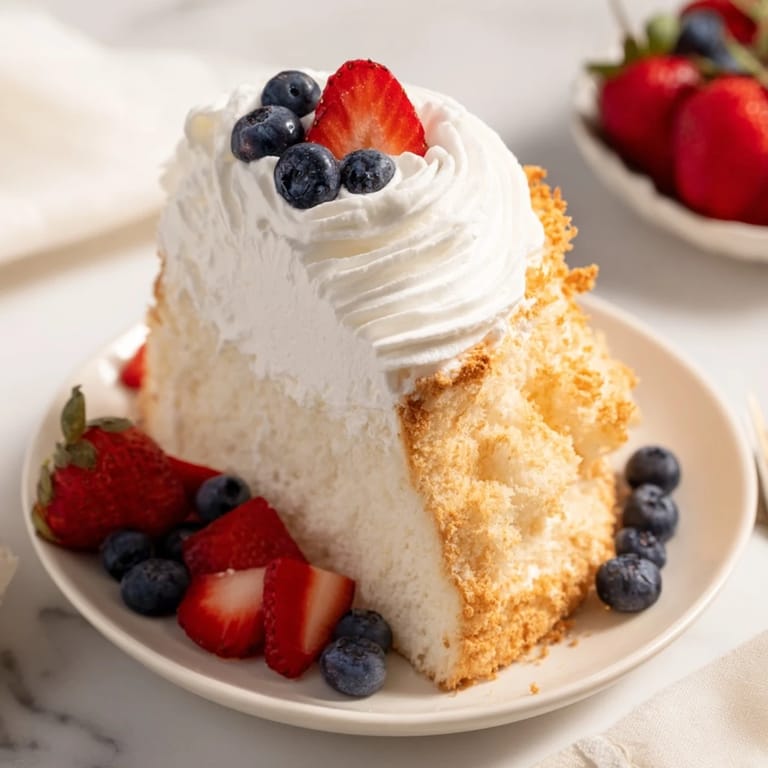
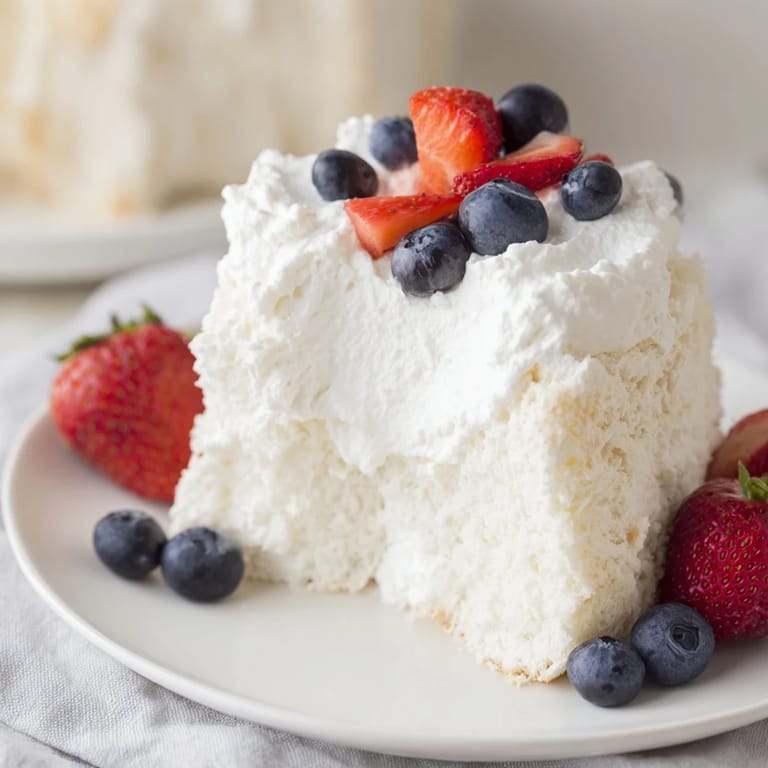
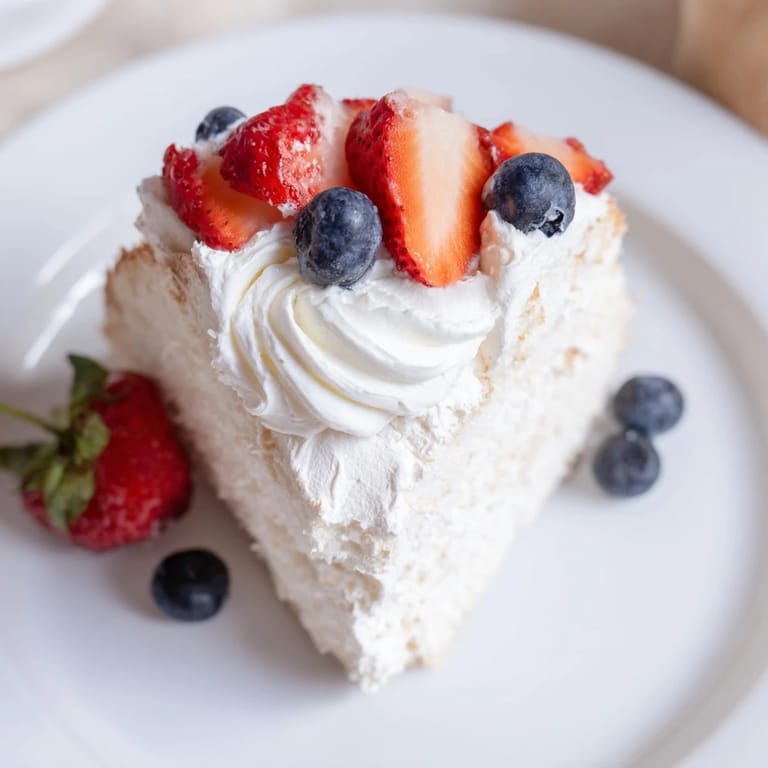
Serve this cake completely plain if you want to taste its actual flavor—the delicate vanilla and that gentle sweetness—or pile it high with fresh berries and whipped cream for something that feels like celebration. I've added lemon zest to the batter for brightness, and I've topped it with a raspberry coulis that looked almost painted on the plate. The cake's neutrality means it welcomes whatever you want to do with it.
- Fresh berries and whipped cream are the classic pairing, but don't underestimate it plain with a cup of tea.
- If you want to add flavor directly to the cake, citrus zest or a tablespoon of cocoa powder mixed into the flour mixture works beautifully.
- This cake actually keeps for a day or two wrapped loosely, though it's best enjoyed the day you make it when the crumb is at its most delicate.
 Save
Save Angel food cake is one of those recipes that teaches you as much about cooking as it teaches you about cake. It asks for precision and patience, then rewards you with something that tastes like pure lightness.
Recipe FAQs
- → Why is the cake pan not greased?
The batter needs to cling to the ungreased sides for proper rise and volume, ensuring a fluffy texture.
- → What causes the cake to be so light and airy?
Whipping egg whites to stiff peaks incorporates air, which creates the cake’s characteristic fluffy texture.
- → Can I add flavor variations to the cake?
Yes, small amounts of almond or vanilla extract enhance flavor, and lemon zest or fruit compotes add refreshing twists.
- → How is the cake cooled for best results?
Inverting the pan upside down allows the cake to cool without collapsing, preserving its height and airiness.
- → What flour should I use for the best texture?
Sifted cake flour is preferred for a tender crumb, but a substitution with all-purpose flour and cornstarch can be used.
- → How should the egg whites be prepared?
Use room-temperature egg whites free of yolk to achieve optimal volume and stability when whipped.