 Save
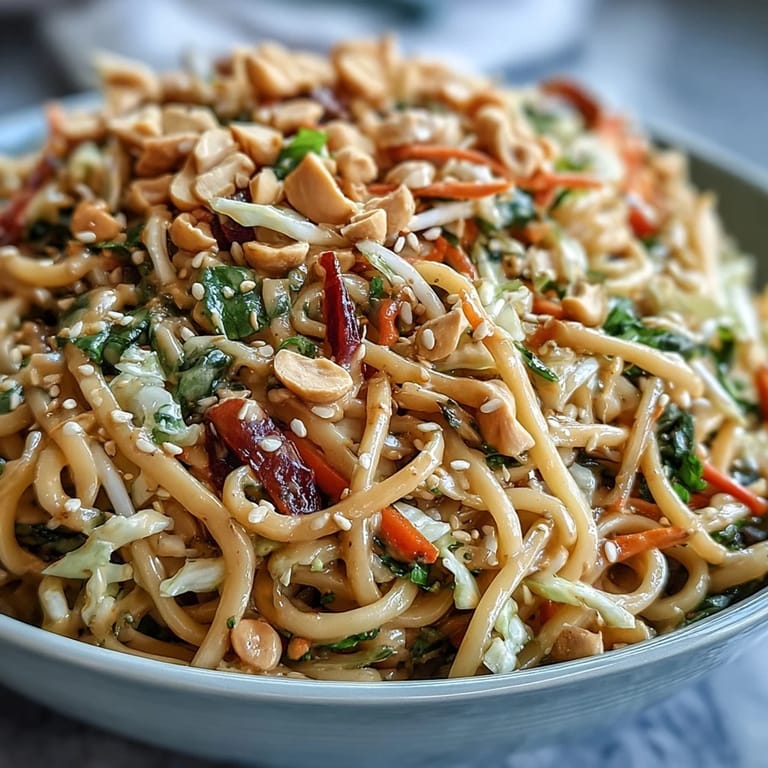
Save There's something wonderfully chaotic about the moment I first made this peanut noodle bowl on a sweltering afternoon when my fridge felt too warm to turn on the oven. I'd grabbed rice noodles on a whim, some vegetables that needed rescuing, and a jar of peanut butter that had been sitting there longer than I'd like to admit. What emerged was this unexpectedly vibrant, satisfying bowl that somehow tasted both comforting and bright—exactly what I needed when the world felt too hot to handle.
I remember making this for a potluck where I knew exactly nobody, and it became this unexpected conversation starter. People kept coming back for thirds, and someone actually asked for the recipe written down, which was when I realized this wasn't just an improvised lunch hack—it was something real.
Ingredients
- Rice noodles or wheat noodles (300 g): These become silky and tender without falling apart, unlike some thinner pastas that turn to mush.
- Medium carrot, julienned: The sweetness balances the savory dressing, and those thin ribbons feel delicate in your mouth.
- Small red bell pepper, thinly sliced: This adds a slight char-like flavor and crunch that keeps the bowl from feeling monotonous.
- Shredded red cabbage (1 cup): It's sturdy enough to stay crisp even when dressed, and provides a beautiful color contrast that makes the bowl look alive.
- Scallions, thinly sliced (2): The green parts go on at the end so they keep their brightness and slight onion bite.
- Fresh cilantro leaves (1/2 cup): This is personal preference—I learned some people passionately dislike it, so keep extra on the side.
- Bean sprouts (1/2 cup): They add a delicate crunch that's different from any other vegetable here.
- Creamy peanut butter (1/3 cup): The creamy kind works best because chunky can gum up when you're whisking; use natural if you want less sugar.
- Soy sauce (2 tbsp): This is the backbone of savory flavor—tamari works perfectly if you're avoiding gluten.
- Sesame oil (1 tbsp): A little goes a long way; it's toasted and aromatic, so resist the urge to add more.
- Rice vinegar (1 tbsp): The subtle acidity keeps everything bright and prevents the dressing from feeling heavy.
- Honey or maple syrup (1 tbsp): Just enough sweetness to round out the flavors without making it taste like dessert.
- Freshly grated ginger (1 tsp): Fresh is non-negotiable here—bottled ginger tastes flat and tired.
- Minced garlic clove (1 small): One is enough; more than that and the dressing starts tasting like you're fighting a cold.
- Warm water (2–4 tbsp): This thins the dressing to a pourable consistency without watering down the flavor.
- Roasted peanuts, roughly chopped (2 tbsp): The toasty texture on top is essential—it's what makes this feel finished.
- Toasted sesame seeds (1 tsp): These scatter across the top and add a nutty depth you'll notice immediately.
- Lime wedges: Squeeze these over your bowl just before eating to brighten everything at the last second.
Tired of Takeout? 🥡
Get 10 meals you can make faster than delivery arrives. Seriously.
One email. No spam. Unsubscribe anytime.
Instructions
- Cook the noodles until they're tender but still have a slight bite:
- Follow the package timing, then drain them well and rinse under cold water until they stop steaming. This stops the cooking and keeps them from turning into a clumpy mess.
- Whisk together the peanut dressing while the noodles cool:
- Start with the peanut butter, soy sauce, sesame oil, vinegar, and sweetener, then add the ginger and garlic. Gradually whisk in warm water—the dressing should feel like thick cream, not pancake batter.
- Pile everything into one big bowl and toss with purpose:
- Noodles, carrot, bell pepper, cabbage, most of the scallions, cilantro, and bean sprouts all go in together. Pour the dressing over the top and toss until every noodle strand has a light coating.
- Plate it up and make it look good:
- Divide the noodle mixture among bowls, then scatter the chopped peanuts, sesame seeds, and remaining scallions on top. Serve with lime wedges alongside so everyone can squeeze them just before eating.
 Save
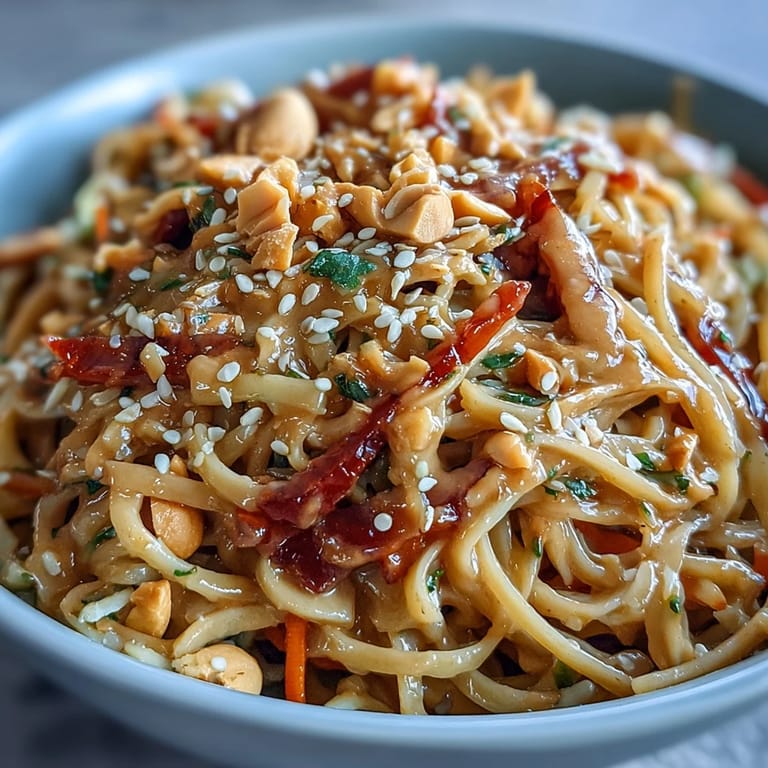
Save There was this one evening when I made this bowl for myself after a long week, and I sat on my kitchen steps eating it straight from the bowl, no music or phone, just the sound of my fork against ceramic. That's when I understood this wasn't complicated restaurant food—it was honest, alive, and exactly what I needed.
Playing with Temperature and Texture
This bowl works beautifully cold straight from the fridge, especially on days when turning on the stove feels like too much effort. You can also gently warm it in a pot over low heat if you want something more comforting, though the vegetables will soften slightly. Some people prefer it at room temperature, which hits a nice middle ground where the flavors feel more pronounced but the noodles stay tender.
Building Your Own Variations
Once you understand how this bowl works, you'll start improvising without thinking about it. Grilled chicken or tofu turns this into something more substantial, while shrimp adds a briny sweetness that works beautifully with the peanut dressing. Cucumber, snap peas, or even roasted sweet potato slices slide in easily if you have them on hand, and they'll taste like they were supposed to be there all along.
The Dressing Is Everything
I learned pretty quickly that the dressing is the whole story here—it's what transforms simple noodles and raw vegetables into something you'll actually look forward to eating. The balance between salty soy sauce, nutty sesame oil, bright vinegar, and creamy peanut butter is delicate, which is why tasting as you go matters. If it tastes too thick, water it down slowly; if it tastes flat, add a tiny squeeze of lime or a whisper more ginger.
- Make the dressing first so it has time to cool and the flavors meld together properly.
- If you're doubling the recipe, don't automatically double the garlic—start with one clove and add more only if it needs it.
- The dressing keeps in the fridge for up to five days, so you can make it ahead and toss it with fresh noodles whenever hunger strikes.
 Save
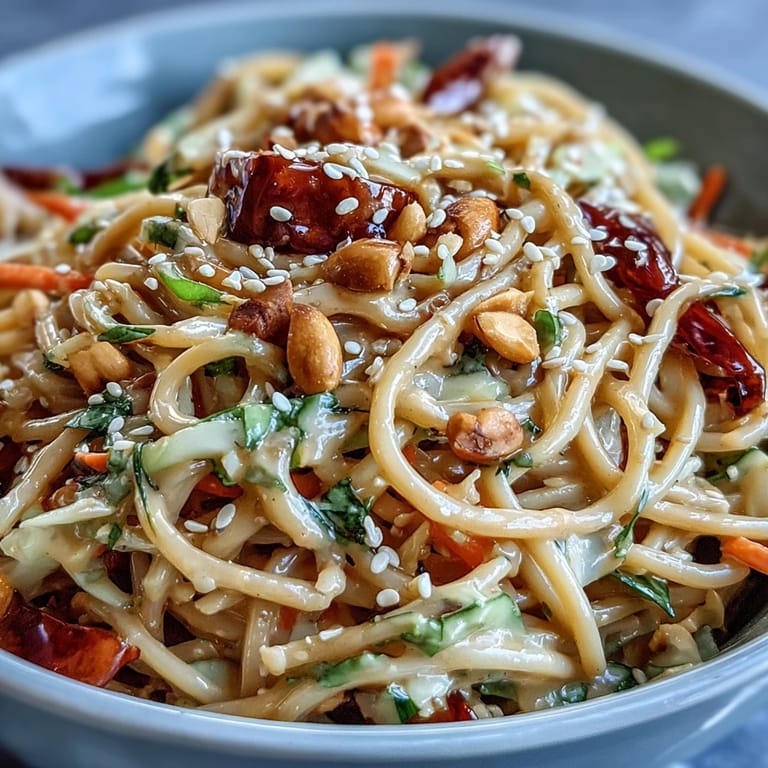
Save This bowl taught me that the best meals aren't the ones that require fancy equipment or hard-to-find ingredients—they're the ones that taste like someone actually cared about how they turned out. Make this when you need something real.
Recipe FAQs
- → Can I use different noodles?
Yes, both rice and wheat noodles work well, depending on your preference or dietary needs.
- → How can I make the dressing less thick?
Gradually whisk in warm water until the peanut dressing reaches your desired consistency.
- → Is this dish served warm or cold?
It can be enjoyed either cold or gently warmed, making it versatile for any season.
- → What protein options complement this bowl?
Grilled tofu, chicken, or shrimp are great additions to boost protein content.
- → Are there common allergens in this dish?
This dish contains peanuts, soy, and sesame, and may contain gluten if wheat noodles or regular soy sauce are used.
- → What vegetables are included?
Shredded carrot, red bell pepper, red cabbage, scallions, cilantro, and bean sprouts add crunch and freshness.