 Save
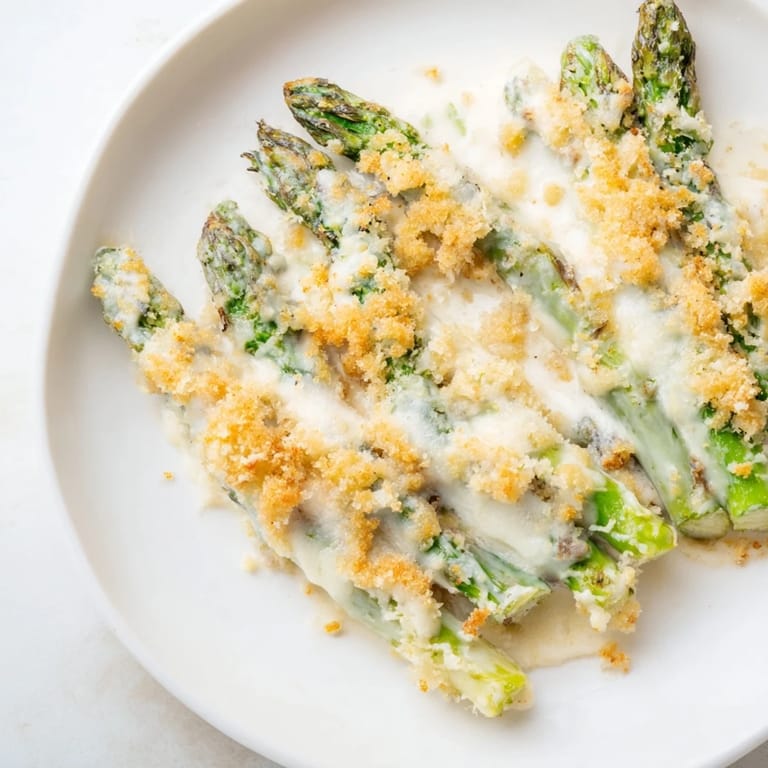
Save My mother pulled this casserole from the oven one April evening, and the kitchen filled with the smell of butter and melting cheese so completely that my dad stopped mid-sentence at the dinner table. I was maybe eight, and I remember thinking that something so golden and bubbling must be pure magic. Years later, when I made it myself for the first time, I understood—it's not magic, it's just cream and asparagus and the kind of patient stirring that makes something ordinary become extraordinary.
I made this for my sister's potluck after she'd complained all week about being tired of the usual casserole rotations. When she tried it, she got quiet for a moment, then asked for the recipe before we'd even finished the first serving. That casserole dish went home in her car, completely empty, and she's made it every spring since.
Ingredients
- Fresh asparagus: Look for spears that are firm and bright green with tightly closed tips; thinner spears cook more evenly and have a delicate texture that cream brings out beautifully.
- Unsalted butter: This is the foundation of your sauce, so don't skip quality here; it's where the flavor actually begins.
- All-purpose flour: This thickens the sauce without any fancy ingredients—just whisk it in smoothly to avoid lumps.
- Whole milk and heavy cream: The milk keeps it balanced while the cream makes it luxurious; together they create that silky texture that clings to every spear.
- Gruyère and Parmesan cheese: Gruyère melts with an almost nutty sophistication while Parmesan adds a sharp bite; using both is the secret to depth.
- Ground nutmeg: Just a whisper of this—I learned the hard way that it can easily overpower, but a quarter teaspoon is exactly enough to make people wonder what's making this taste so right.
- Fresh breadcrumbs: Toast them gently in melted butter so they turn golden and crispy rather than soggy; this is your textural contrast and it matters.
Tired of Takeout? 🥡
Get 10 meals you can make faster than delivery arrives. Seriously.
One email. No spam. Unsubscribe anytime.
Instructions
- Set your stage:
- Preheat your oven to 400°F and grease a medium baking dish—I use a 9x13 inch dish because it lets everything settle into an even layer. This warming oven is your signal that you're about to make something warm and welcoming.
- Blanch the asparagus:
- Bring salted water to a rolling boil, add the asparagus, and count to about 150 seconds—you want them just tender enough to bend gently but still bright green and snappy. Drain them well and pat them completely dry with a clean towel because any water will dilute your beautiful sauce.
- Build the base:
- Melt butter in a saucepan over medium heat, then scatter in flour and stir constantly for one minute—this cooks out the raw flour taste and is crucial. Don't rush it or skip ahead; it's a simple step that makes everything that follows work.
- Create the sauce:
- Slowly pour in the milk and cream while whisking, then keep whisking gently until it thickens into something you'd want to pour over absolutely anything, about three to four minutes. You'll feel it change under the whisk, becoming silkier and more luxurious as the flour does its quiet work.
- Add richness and seasoning:
- Pull the pan off heat, stir in half the Gruyère and all the Parmesan, then taste and season with salt, pepper, and that whisper of nutmeg. Remember that the cheese is already salty, so go easy at first.
- Assemble:
- Arrange your asparagus in the baking dish in a neat pattern, pour the sauce over it so every spear is kissed, then scatter the remaining Gruyère across the top. This is the moment that determines whether it'll bake into something golden or something merely fine.
- Top with gold:
- Toss breadcrumbs with melted butter in a small bowl, then sprinkle them evenly over the cheese layer so they'll catch the heat and turn crispy. This topping is what people will remember—that contrast between creamy underneath and crunchy on top.
- Bake to golden:
- Slide it into the oven for 20 to 25 minutes until the top is golden brown and the edges are quietly bubbling, which tells you everything is hot all the way through. Don't open the oven door too many times or the temperature will drop and your timing will shift.
- Rest before serving:
- Let it sit on the counter for exactly five minutes—this isn't wasting time, it's letting the sauce set just enough so it won't run all over the plate when you serve it.
 Save
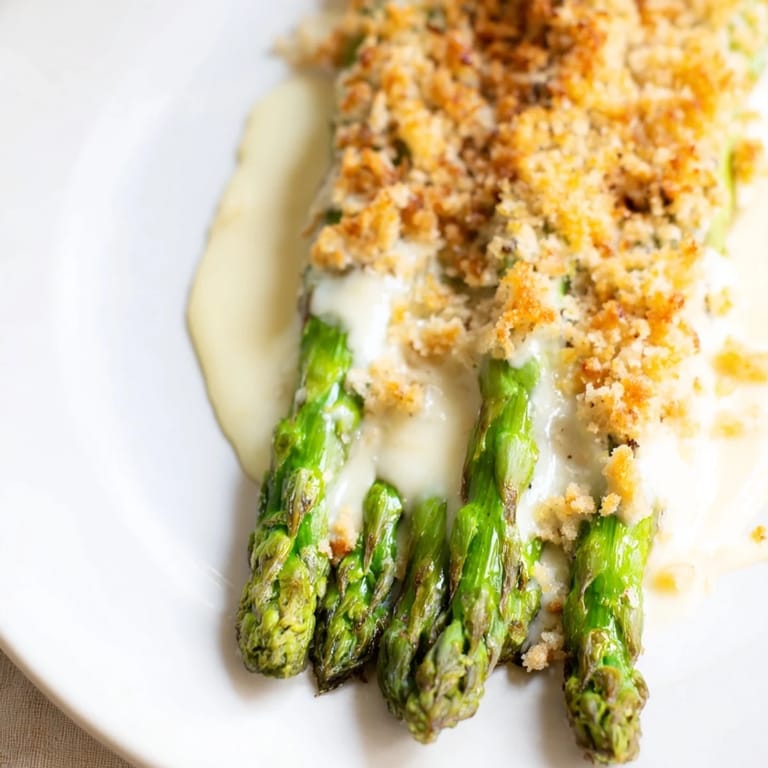
Save There was a night when my partner brought home fresh asparagus from the farmer's market just because, and I made this casserole almost without thinking. We ate it standing up at the kitchen counter, still warm, and didn't even bother with plates. It became one of those small, ordinary moments that later felt like it meant something—when you're quietly happy and the food tastes right and that's enough.
Making It Your Own
This recipe is sturdy enough to adapt without falling apart. I've stirred garlic powder into the sauce when I wanted something more savory, and I've mixed fresh chives into the breadcrumb topping when spring herbs were calling for attention. You can use sharp cheddar instead of Gruyère if that's what's in your fridge, or swap half the breadcrumbs for grated Parmesan for extra cheese flavor—the casserole is forgiving enough to welcome these small changes.
Serving Ideas
Serve this as a side beside roasted chicken or as a vegetarian main with a simple green salad and crusty bread. It also holds beautifully as leftovers—reheat it gently in a low oven so the top stays crispy and the sauce doesn't separate. I've brought it to potlucks in the baking dish with foil on top, and people always ask where the recipe came from.
Storage and Make-Ahead Tips
You can assemble this casserole up to six hours ahead and bake it just before serving, or make it completely and refrigerate it for up to three days. Reheat gently at 325°F covered with foil so the breadcrumb topping doesn't burn while the inside warms through. This is the kind of dish that tastes just as good on Tuesday as it did on Sunday, which makes it perfect for planning ahead.
- Assemble the night before and bake fresh for the best texture and golden finish.
- Freeze unbaked casseroles for up to two months if you want to bake them straight from frozen, just add a few extra minutes to the baking time.
- Reheat individual portions in a 350°F oven for about 15 minutes if you're rewarming just one or two servings.
 Save
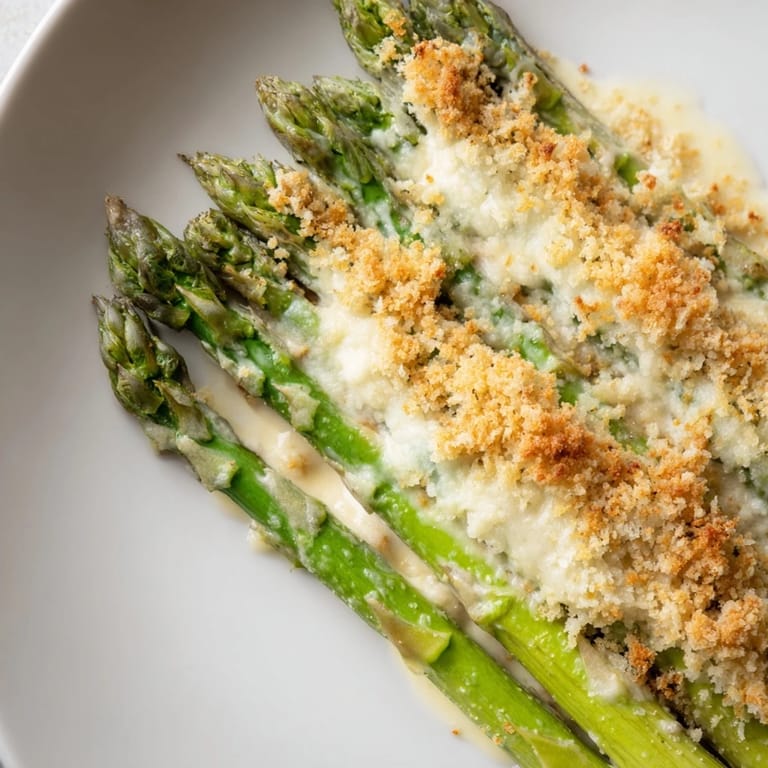
Save This casserole has become my go-to when spring arrives and I want to cook something that feels both familiar and special. It's proof that the simplest recipes, made with care, are often the ones that stay with people.
Recipe FAQs
- → How do I ensure the asparagus stays tender in the dish?
Blanch the asparagus briefly in boiling salted water for 2–3 minutes until just tender yet crisp, then drain and dry before baking for best texture.
- → Can I substitute the Gruyère cheese used in the sauce?
Yes, you can use mozzarella or cheddar cheese to vary the flavor while still achieving a creamy and melty topping.
- → What is the purpose of the breadcrumb topping?
The buttered breadcrumbs create a golden, crunchy crust that adds texture contrast to the creamy asparagus base.
- → How can I add extra flavor to this dish?
Try adding a pinch of garlic powder to the cheese sauce or mixing chopped fresh chives into the breadcrumb topping for added aroma.
- → Is this dish suitable for vegetarians?
Yes, it contains dairy but no meat, making it a satisfying option for vegetarian dining.