 Save
Save There's something about the smell of garlic hitting warm butter that stops me mid-conversation. I discovered au gratin potatoes late one November at a dinner table where I wasn't expecting to sit, and the person next to me kept talking about how their grandmother made it every holiday. I asked for the recipe thinking it would be complicated, but when I finally made it myself, I realized the magic wasn't in technique—it was in the patience of letting cream and cheese transform humble potatoes into something that felt like a warm hug on a plate.
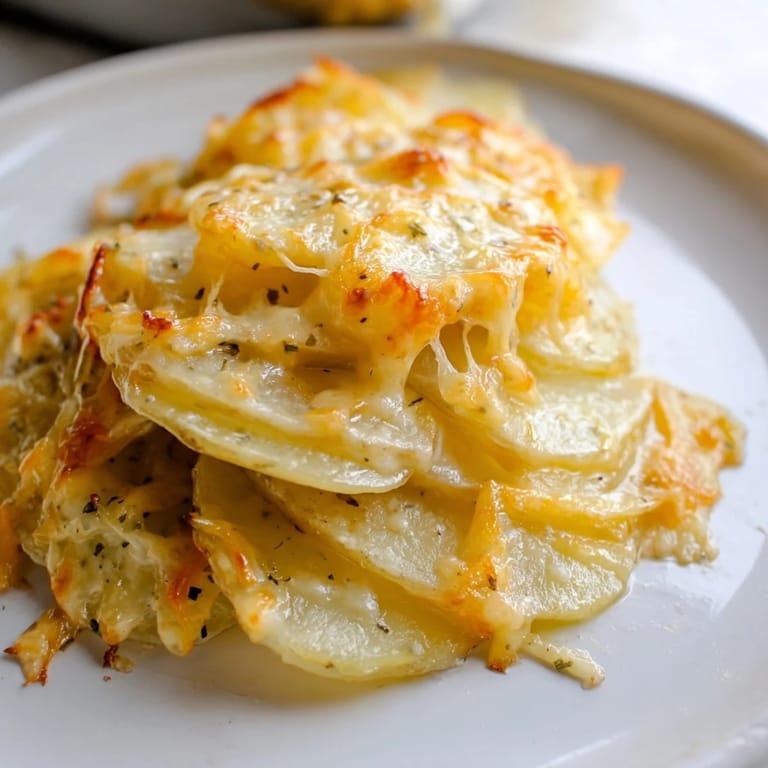
I made this for a potluck where I knew exactly three people, and by the end of the evening, I'd been adopted by the whole group—mostly because the dish came out with that perfect golden crust that catches the light just right. Someone asked if I'd trained as a chef, and I almost laughed telling them I'd just followed the timing and refused to peek under the foil too early. That moment made me realize that sometimes the simplest recipes become the most memorable ones, not because they're fancy, but because they show up when people need comfort.
Ingredients
- Yukon Gold or Russet potatoes (1.5 kg / 3 lbs), peeled and thinly sliced: These varieties hold their shape better than waxy potatoes, and the thin slicing lets them absorb the cream without turning mushy—I learned this by doing it wrong the first time.
- Garlic (2 cloves), minced: Two cloves is enough to whisper flavor without shouting; any more and it overtakes the delicate potato-and-cheese balance.
- Unsalted butter (60 g / 4 tbsp): Use unsalted so you control the salt, and bloom the garlic in it before adding cream to unlock its sweetness.
- Heavy cream (500 ml / 2 cups): Full-fat cream is non-negotiable here; it creates the silky sauce that makes this dish irresistible.
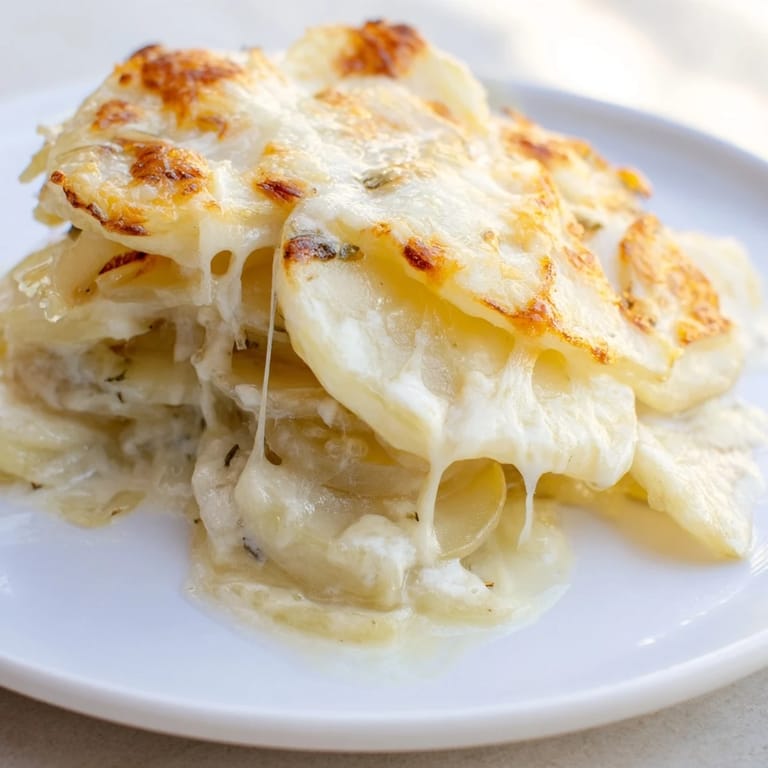
- Gruyère cheese (240 g / 2 cups), grated: This is where the recipe earns its stripes—Gruyère melts beautifully and adds a nutty depth that generic cheddar simply won't give you.
- Parmesan cheese (60 g / ½ cup), grated: The Parmesan adds sharpness and helps create that crackling golden top.
- Salt (1 tsp): Taste as you go; potatoes need seasoning to shine.
- Freshly ground black pepper (½ tsp): Freshly ground makes a noticeable difference in the final flavor.
- Freshly grated nutmeg (¼ tsp), optional: A whisper of nutmeg makes people pause and ask what that subtle warmth is; don't skip it if you have it.
Tired of Takeout? 🥡
Get 10 meals you can make faster than delivery arrives. Seriously.
One email. No spam. Unsubscribe anytime.
Instructions
- Preheat and prep your dish:
- Set your oven to 190°C (375°F) and butter the baking dish generously so nothing sticks. This ten minutes of prep frees you up to focus on the cream sauce when it matters most.
- Build your aromatic base:
- Melt the butter over medium heat, then add your minced garlic and let it sizzle for just a minute until it's fragrant and turns light golden. You'll know it's ready when your kitchen smells like a French bistro.
- Make the silky sauce:
- Pour in the heavy cream and season it with salt, pepper, and nutmeg if you're using it. Bring it to a gentle simmer, watching for tiny bubbles to break the surface, then take it off the heat before it boils down.
- Layer one:
- Spread half your potato slices across the bottom of the dish in overlapping rows, pour half the cream mixture over them, then scatter half of both cheeses on top. This base layer is your foundation; don't rush it.
- Layer two:
- Repeat with the remaining potatoes, cream, and cheeses, making sure everything is covered and the top is an even layer of cheese waiting to turn golden.
- The covered bake:
- Cover the dish tightly with foil and slide it into the oven for forty minutes; the foil traps steam and keeps the potatoes tender while preventing the cheese from browning too fast. You can walk away and be confident nothing will go wrong.
- The golden finale:
- Remove the foil and bake uncovered for another twenty minutes until the top is deep golden and a fork slides easily through the potatoes. If the top isn't golden enough, give it another five minutes; burnt edges are a small price for perfect crust.
- Rest and serve:
- Let it sit for ten minutes before serving, which gives the layers time to set so they don't slide around on the plate. This is also when the kitchen fills with that irresistible aroma that brings everyone to the table.
 Save
Save My sister brought this to a dinner where my grandmother came to the table quieter than usual, and watching her take that first bite—the way she closed her eyes—reminded me that food isn't just about nourishment. It's about belonging, about knowing someone made something with their hands because they wanted you to feel cared for.
Choosing Your Cheese Wisely
Gruyère is the classic choice because it melts into silky strands and develops a nutty sweetness as it bakes, but I've substituted it with sharp cheddar when that's what I had on hand, and it worked beautifully—just with a more assertive bite. Emmental is another solid choice if you want something milder and creamier. The key is choosing a cheese that melts smoothly rather than turning oily or grainy; aged cheeses and hard varieties tend to do this better than fresh ones.
Making It Your Own
This is one of those recipes that welcomes interpretation without losing its identity. Some people layer in fresh thyme leaves between the potato rows for an herbal undertone, others add a pinch of cayenne for heat, and I once had a version with a thin layer of caramelized onions that absolutely transformed it. The base—potatoes, cream, cheese, gentle seasoning—is solid enough to hold all these variations without becoming something entirely different.
Serving and Pairing
Au gratin potatoes are humble enough to serve alongside a roasted chicken or beef without any fuss, but they're rich enough to be the main event with nothing more than a crisp green salad and crusty bread to soak up the cream. I've served it warm straight from the oven and also at room temperature the next day, sliced into rectangles like a casserole—both are completely different experiences, and both are worth trying.
- Pair it with a simple green salad dressed in bright vinaigrette to cut through the richness.
- Leftover slices reheat beautifully in a 160°C oven wrapped loosely in foil for about fifteen minutes.
- This dish feeds six generously or stretches to eight if you're serving it alongside other hearty sides.
 Save
Save There's a reason this dish has stayed on tables for generations—it asks for simple ingredients, a bit of patience, and rewards you with something that feels both elegant and impossibly comforting. Make it, and let it become part of your story the way it's become part of mine.
Recipe FAQs
- → What type of potatoes work best for this dish?
Yukon Gold or Russet potatoes are recommended due to their texture and ability to hold shape when baked.
- → Can the cheese be substituted?
Yes, Gruyère can be replaced with sharp cheddar or Emmental for slightly different flavors.
- → How do you achieve the golden crust?
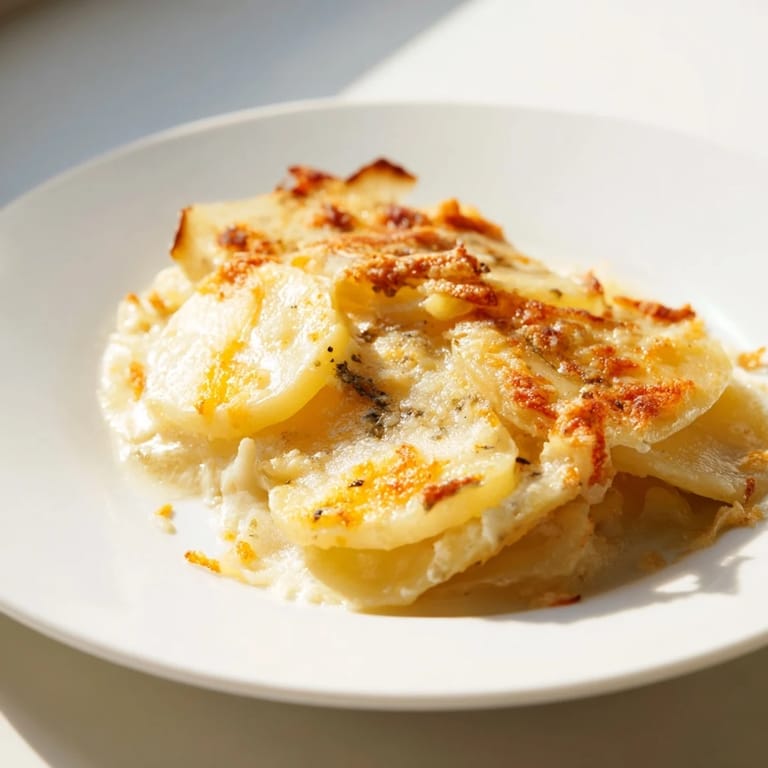
The mixture of Gruyère and Parmesan cheese, baked uncovered in the last 20 minutes, forms a rich golden crust.
- → Is it necessary to pre-cook the potatoes before baking?
No, thin slicing and slow baking allow the potatoes to become tender without prior cooking.
- → How can the flavor be enhanced?
Adding fresh thyme between layers infuses a subtle herb aroma enhancing the creamy garlic base.