 Save
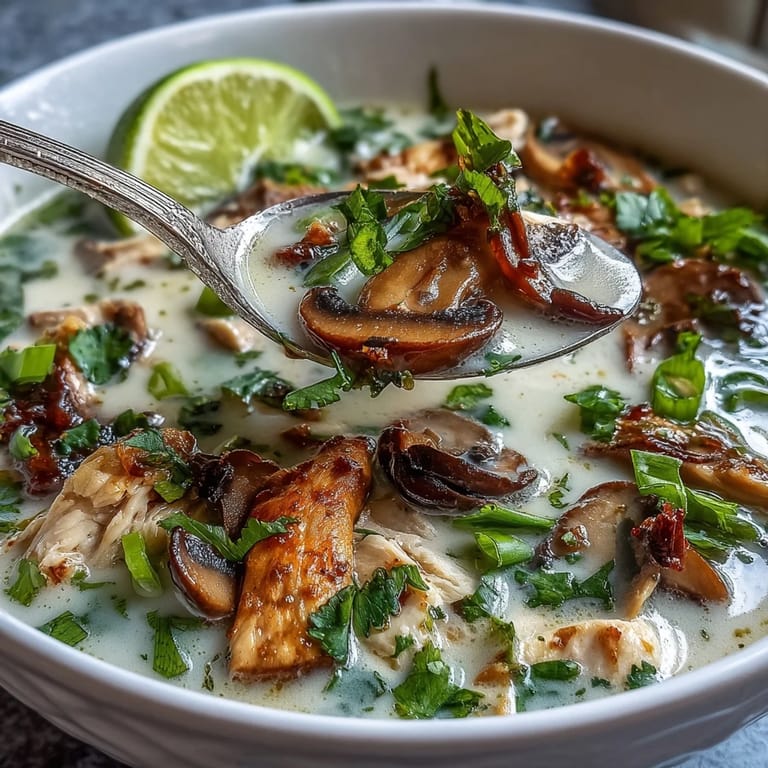
Save The first time I tasted Tom Kha Gai was at a tiny family run Thai restaurant in Chicago, where the owner's grandmother personally came out to explain that the secret was in the galangal, not just ginger like most places use. That bowl of soup transformed my understanding of what comfort food could be—creamy without being heavy, bright with lime yet warming from chilies, with layers of fragrance that made me close my eyes after every spoonful. I went home that night and spent weeks hunting down makrut lime leaves and proper galangal at Asian markets until I could recreate something close to that memory. Now this soup has become my go to for everything from rainy weeknight dinners to impressing dinner guests who think Thai cuisine is too complicated to make at home.
Last winter, my friend Mai came over and taught me how her mother makes this soup, explaining that the real trick is never letting the coconut milk come to a rolling boil or it will separate and lose that silky texture. We stood in my tiny kitchen, smelling the lemongrass as it hit the hot broth, and she showed me how to tear the lime leaves to release their essential oils. That evening we ate bowl after bowl while the snow fell outside, and I finally understood why this soup is considered the ultimate comfort food across Thailand.
Ingredients
- Chicken broth: Use a good quality broth as your base since it carries all the aromatic flavors—homemade is best but a low sodium store bought version works perfectly
- Lemongrass: Trim the woody root and top, then smash the stalk with the back of your knife to release the fragrant oils before adding to the broth
- Fresh galangal: This earthy, piney relative of ginger is non negotiable for authentic flavor—look for it frozen at Asian markets if fresh isn't available
- Makrut lime leaves: Tear them into pieces before adding to the soup to help release their incredible citrusy floral aroma
- Thai birds eye chilies: These pack serious heat, so start with less if you're sensitive—you can always add more at the end
- Chicken thighs: Thighs stay tender and juicy in the soup much better than breast meat, which can turn rubbery in the hot liquid
- Full fat coconut milk: Don't use light coconut milk—the fat content is essential for the luxurious texture and proper flavor balance
- Fresh mushrooms: Straw mushrooms are traditional but cremini or button mushrooms work beautifully and are easier to find
- Shallots: Their mild sweetness bridges the gap between the savory broth and creamy coconut milk
- Fish sauce: This provides the essential salty umami base—use a good quality brand like Red Boat for the best flavor
- Fresh lime juice: Add this at the end and taste as you go—the bright acid is what makes the soup sing
- Palm sugar: Just a touch helps balance all the strong flavors without making the soup taste sweet
- Fresh cilantro and green onions: These add a fresh pop of color and herbaceousness right before serving
Tired of Takeout? 🥡
Get 10 meals you can make faster than delivery arrives. Seriously.
One email. No spam. Unsubscribe anytime.
Instructions
- Build the aromatic broth base:
- Bring your chicken broth to a gentle simmer over medium heat, then add the smashed lemongrass, galangal slices, torn lime leaves, and crushed chilies. Let this mixture steep for 5 to 7 minutes until your kitchen is filled with an incredible fragrance and the broth has taken on the aromatic flavors.
- Cook the chicken:
- Add the sliced chicken thighs and shallots to the infused broth, cooking for 3 to 4 minutes until the chicken turns opaque and is just cooked through. Don't overcook it here—the chicken will continue cooking when we add the coconut milk.
- Add the coconut milk:
- Stir in the mushrooms and pour in the coconut milk, then bring everything back to a gentle simmer. The key here is to never let the soup come to a rolling boil or the coconut milk will separate and lose that silky smooth texture we want.
- Balance the flavors:
- Season the soup with fish sauce, palm sugar, and lime juice, then taste and adjust. You're looking for that perfect Thai balance of salty, sour, sweet, and creamy—add more lime juice for brightness or fish sauce for depth.
- Finish and serve:
- Remove the soup from heat and fish out the lemongrass stalk, galangal slices, and large lime leaf pieces if you prefer. Ladle into bowls and top generously with fresh cilantro, sliced green onions, and extra lime wedges on the side.
 Save
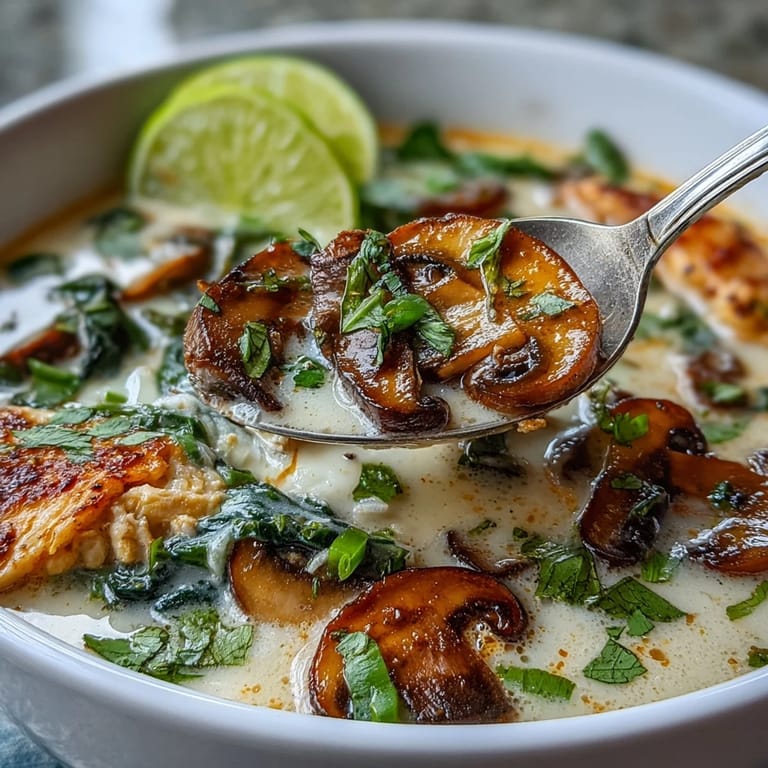
Save This soup has become my favorite remedy for everything from cold winter evenings to days when I just need something nourishing. There's something about the steam rising from the bowl, carrying that incredible lemongrass and lime fragrance, that feels like a hug in food form. I've started keeping a stash of galangal in my freezer and lime leaves in my pantry just so I can make this soup at a moment's notice.
Finding Authentic Ingredients
When I first started making Thai food at home, I tried substituting regular ginger for galangal and bay leaves for makrut lime leaves, but the soup never tasted quite right. Then I visited an Asian market and the owner pointed me to the frozen section where they keep galangal year round—it keeps perfectly in the freezer and you can grate or slice it directly from frozen. For the lime leaves, look in the dried herb section or buy fresh and freeze them in a ziplock bag. These two ingredients are what make the soup taste authentic rather than like a Thai inspired dish.
Getting The Balance Right
The magic of Tom Kha Gai is in the balance of flavors—salty from fish sauce, sour from lime, sweet from palm sugar, and creamy from coconut milk. I've learned to start with less fish sauce and lime juice than I think I need, then taste and add more gradually. The fish sauce provides the salt, so be careful not to add extra salt. And that tiny bit of sugar might seem unnecessary, but it's what pulls all the strong flavors together into something harmonious.
Making It Your Own
While traditional Tom Kha Gai is made with chicken, I've found this recipe works beautifully with other proteins and even as a vegetarian option. The key is keeping the aromatic base the same and adjusting the cooking time for whatever you add to the soup. Once you master the broth, you'll find yourself making this soup again and again, tweaking it each time based on what you have on hand and what you're craving.
- Try shrimp instead of chicken and add them during the last 2 minutes so they don't overcook
- For a vegetarian version, use vegetable broth, extra firm tofu cubes, and soy sauce or mushroom soy sauce instead of fish sauce
- Add a handful of baby spinach or bok choy during the last minute of cooking for extra nutrition and color
 Save
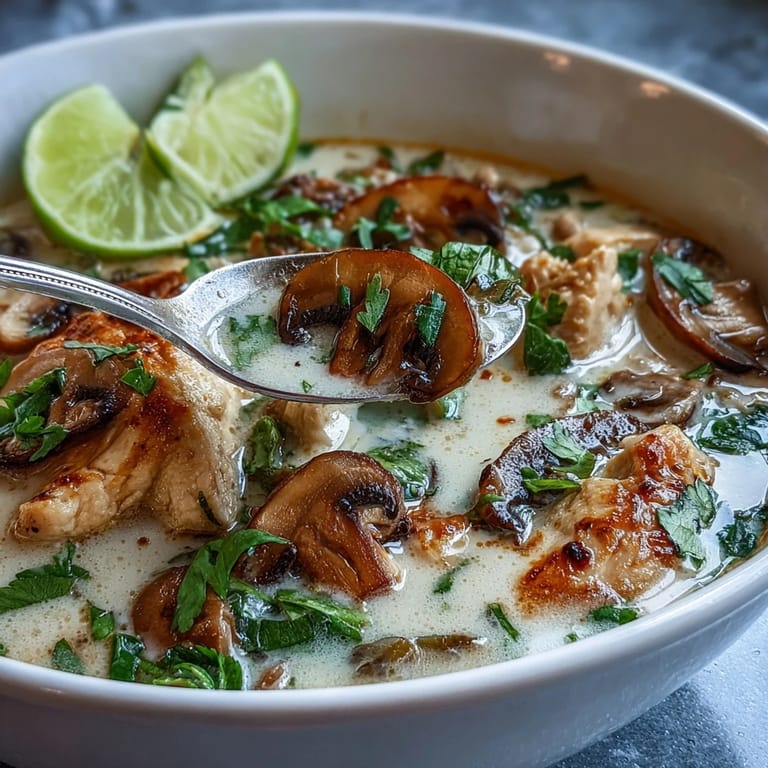
Save There's something deeply satisfying about making a soup that transports you halfway across the world with just one spoonful. I hope this recipe brings as much warmth and comfort to your kitchen as it has to mine.
Recipe FAQs
- → What makes Tom Kha Gai different from other Thai soups?
Tom Kha Gai stands apart through its rich coconut milk base, which creates a creamy texture unlike the clear broth of Tom Yum. The soup gets its distinctive aroma from galangal, lemongrass, and makrut lime leaves, while the perfect balance of fish sauce, lime juice, and palm sugar delivers that signature sweet-sour-savory profile Thai cuisine is known for.
- → Can I substitute galangal with ginger?
While ginger can work in a pinch, galangal has a unique piney, citrusy flavor that's essential for authentic taste. If you must substitute, use younger ginger and add it towards the end of cooking. For the best results, seek out fresh or frozen galangal at Asian markets—many stores now carry it in their international aisles.
- → How do I prevent the coconut milk from curdling?
The key is gentle heat—never let the soup reach a rolling boil after adding coconut milk. Simmer gently instead, and avoid stirring too vigorously. Using full-fat, unsweetened coconut milk also helps maintain consistency. If separation occurs, simply whisk gently before serving.
- → Can I make this vegetarian?
Absolutely. Swap chicken broth for vegetable broth, replace sliced chicken with firm tofu cubes, and use soy sauce or tamari instead of fish sauce. The aromatic base remains the same, delivering that signature Thai flavor profile while keeping the dish completely plant-based.
- → How spicy is this soup?
The heat level depends on the Thai birds eye chilies—start with three lightly crushed peppers for medium spice. Remove some seeds for milder heat, or add more chilies if you prefer extra kick. The soup remains enjoyable even with less spice thanks to its complex aromatic profile.
- → What's the best way to store leftovers?
Store in an airtight container in the refrigerator for up to three days. The flavors often deepen and improve overnight. When reheating, warm gently over low heat—avoid boiling to prevent coconut milk separation. You may need to add a splash of broth or water to restore consistency.