 Save
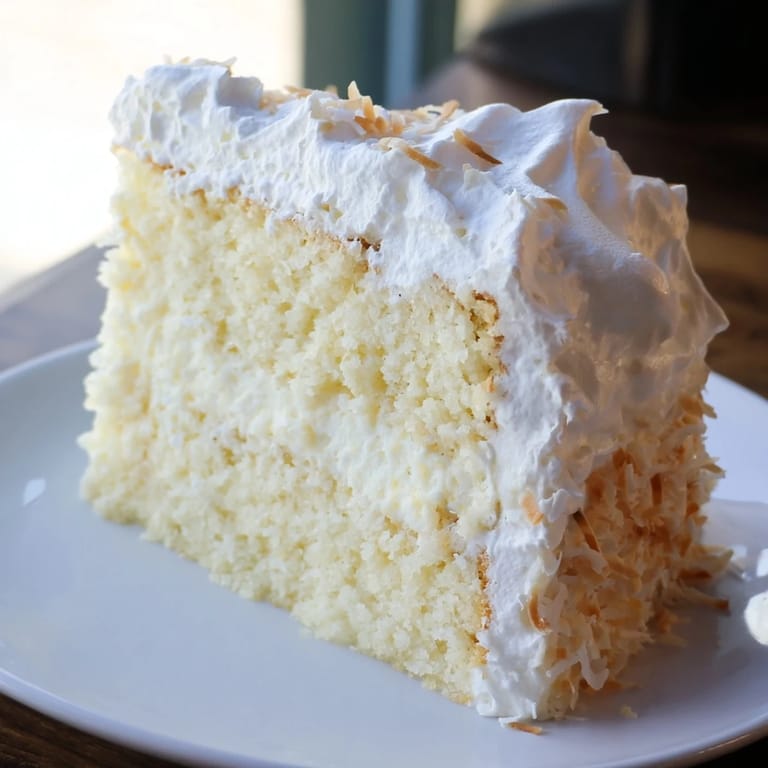
Save My grandmother kept a faded recipe card tucked in her flour tin, and the coconut cake written on it in her careful script is what I picture whenever someone mentions celebration. The first time I made it myself, I was nervous about the seven-minute frosting—watching egg whites transform into glossy peaks felt like minor kitchen magic. But it was the smell of toasted coconut drifting through the house that made me understand why this cake had stayed in her heart for so long.
I baked this for my best friend's thirtieth birthday, and when her eyes lit up seeing three perfect layers emerging from the cooling racks, I realized this cake isn't just dessert—it's a small act of saying you matter. She still texts me asking for it every year.
Ingredients
- Cake flour (2 1/2 cups): Don't skip this for all-purpose flour; cake flour's lower protein content is the secret behind that tender crumb that practically melts.
- Unsalted butter (1 cup, room temperature): Cold butter won't cream properly, so leave it out while you gather everything else.
- Egg whites (4 large, room temperature): Separate them carefully the day before; they incorporate more smoothly when they've had time to sit.
- Whole milk (1 cup, room temperature): The temperature matters—cold milk can cause the batter to seize up mid-mix.
- Coconut milk (1 cup, unsweetened): The filling needs this richness; sweetened condensed milk will throw off the texture.
- Sweetened shredded coconut (2 cups plus 1 1/2 cups for topping): The toasted version adds depth, but plain works beautifully too if you're short on time.
- Cream of tartar (1/4 tsp): This stabilizes the frosting and keeps those peaks from deflating once you've beaten them into place.
Tired of Takeout? 🥡
Get 10 meals you can make faster than delivery arrives. Seriously.
One email. No spam. Unsubscribe anytime.
Instructions
- Prep your pans and oven:
- Set your oven to 350°F and grease three 8-inch rounds really thoroughly—butter every corner and crevice, then dust with flour so nothing sticks. Room temperature is crucial for every ingredient, so pull the butter, eggs, and milk out while you whisk together the dry ingredients.
- Cream the butter and sugar:
- Beat them together for about three minutes until the mixture is pale and fluffy, almost like fluffy clouds. This isn't just texture—it's beating in air that'll make your cake light.
- Add the egg whites gently:
- Add them one at a time, letting each one fully incorporate before adding the next. The batter should stay smooth and homogeneous, never curdled or broken-looking.
- Alternate flour and milk:
- Start and end with flour—this keeps the mixture stable and prevents overmixing. Stir just until everything comes together; overmixing develops gluten and toughens the cake.
- Bake until golden:
- Divide the batter evenly and bake for 25 to 30 minutes, until a toothpick comes out clean. The tops should be pale golden and spring back when you gently touch them.
- Cool the layers properly:
- Let them rest in the pans for ten minutes so they set enough to handle, then turn them out onto cooling racks. Cooling completely prevents the filling from melting into warm cake.
- Make the coconut filling:
- Simmer coconut milk and sugar together, then stir in the shredded coconut off heat. The mixture thickens as it cools and becomes spreadable but still rich.
- Beat the frosting over gentle heat:
- Set the heatproof bowl over simmering water and whisk the egg whites, sugar, water, and cream of tartar constantly. The heat cooks the eggs safely while the whisking whips air into the mixture, creating those iconic stiff peaks in about seven minutes.
- Layer and frost:
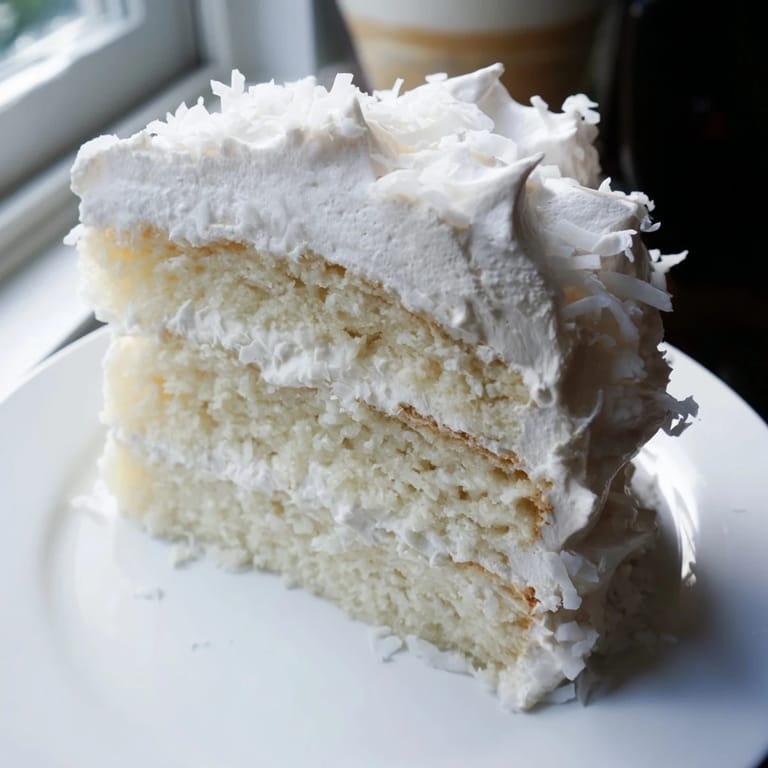
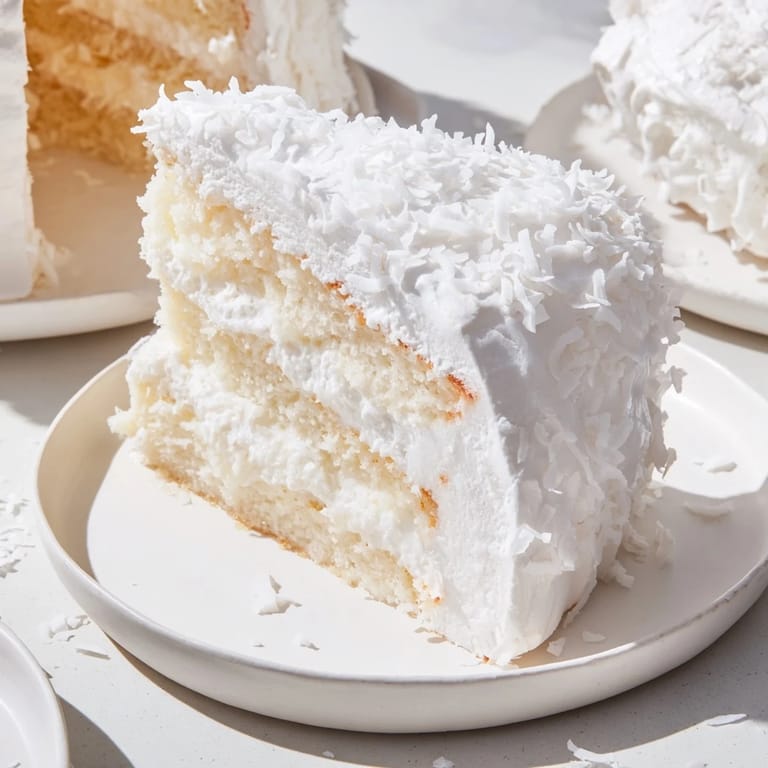
- Place the first cake layer, spread half the filling, add the second layer with the remaining filling, and top with the third. Frost everything in swooping motions, then press toasted coconut onto the sides and top for a beautiful finish.
- Let it rest:
- Give the cake thirty minutes before slicing so the frosting sets and the layers stay clean when cut.
 Save
Save There's something about watching someone bite into a slice and seeing that coconut filling peek out between the tender layers that makes every careful step worthwhile. This cake has a way of becoming a memory before it's even finished cooling.
Why This Cake Works for Every Occasion
Coconut cake lives in this perfect middle ground—formal enough for a wedding or anniversary, but warm and familiar enough for a Sunday dinner with people you love. I've made it for tea parties where it felt elegant on a tiered stand, and I've made it in my kitchen on quiet mornings just to have something beautiful around. The three layers give it presence, but the flavors never feel fussy or overdone.
The Secret Behind the Tender Crumb
Cake flour, egg whites instead of whole eggs, and room-temperature ingredients work together to create that almost-fragile crumb that makes people close their eyes when they take a bite. The alternating method of adding flour and milk keeps you from overdeveloping gluten, and the specific order—flour first and last—matters more than you'd think. Every choice here serves the same goal: lightness and softness in every bite.
Small Touches That Make It Shine
Toasting the coconut for the topping brings out a deeper, nuttier flavor that plain shredded coconut can't match—but if you're pressed for time, the plain version is still stunning and tastes wonderful. The pairing suggestions matter too; this cake sits beautifully alongside strong black tea or a dry sparkling wine, and those small details elevate the whole experience. You could even brush the cooled layers with a light coconut syrup before filling if you want to go one step further.
- Substitute half the milk with coconut milk in the batter itself for an even richer flavor throughout.
- Make sure your heatproof bowl doesn't touch the simmering water underneath, or the frosting will cook too fast.
- If you have coconut extract on hand, a few drops added to the frosting at the very end adds a subtle layer of flavor.
 Save
Save This cake is worth the care it asks for, and the payoff is a moment where people taste something that feels handmade and cherished. There's no shortcut to this kind of beauty.
Recipe FAQs
- → What makes the cake layers tender?
The combination of cake flour and creamed butter with sugar creates a light and tender texture, while careful mixing ensures fluffiness.
- → How is the coconut filling prepared?
The filling is made by simmering coconut milk with sugar, then stirring in shredded coconut to create a thick, spreadable mixture.
- → What is seven-minute frosting and how is it made?
Seven-minute frosting is a light, glossy meringue whipped by heating egg whites, sugar, and water over simmering water, then whipped until stiff peaks form.
- → Can toasted coconut be used for decoration?
Yes, toasted shredded coconut adds extra crunch and a caramelized flavor when pressed onto the frosted cake.
- → How long should the cake set before slicing?
Allow the assembled cake to set for at least 30 minutes to ensure the layers and frosting hold together nicely when sliced.