 Save
Save My neighbor brought over a lemon pound cake one afternoon, still warm from her oven, and the smell alone made me realize I'd been missing something essential. That first bite—dense, buttery, with this bright zing of lemon that didn't apologize—changed how I thought about desserts. I spent weeks trying to recreate it, and when I finally nailed the balance between richness and citrus, it became the cake I make whenever I need to say thank you or celebrate something small. There's something about a proper pound cake that feels both fancy and deeply comforting at the same time.
I made this cake for my mom's book club last spring, and I watched the ladies go absolutely still on their first bite. One of them, Martha, set her fork down and said, "This is what I wish my kitchen smelled like every day," and suddenly I understood why this cake mattered so much—it's not just dessert, it's a moment you can hold in your hands.
Ingredients
- Unsalted butter, softened (1 cup): The foundation of everything—it needs to be soft enough to cream easily, so let it sit on the counter for about 30 minutes.
- Granulated sugar (2 cups): This creams with the butter to trap tiny air bubbles that make the cake rise and feel feathery.
- Large eggs, room temperature (4): Cold eggs won't incorporate smoothly, so pull them out 15 minutes before you start.
- Whole milk (1/4 cup): This keeps the cake tender and carries the lemon flavor throughout.
- Fresh lemon juice (1/4 cup): Use real lemons, never the bottled kind—the flavor difference is the difference between okay and unforgettable.
- Finely grated lemon zest (2 tablespoons): This is where the lemon's personality lives, so grate only the yellow part, never the bitter white pith.
- All-purpose flour (2 1/2 cups): Measure by spooning into the cup and leveling off, not by scooping directly into the bag.
- Baking powder (1 teaspoon): This is your gentle lift, so don't skip it or double it.
- Salt (1/2 teaspoon): It doesn't taste salty—it just wakes up all the other flavors.
- Powdered sugar for glaze (1 cup): Sift it first to break up any lumps so your glaze is silky.
- Fresh lemon juice for glaze (2-3 tablespoons): Start with 2 and adjust until you get the consistency you want—thick enough to cling but loose enough to drip.
Tired of Takeout? 🥡
Get 10 meals you can make faster than delivery arrives. Seriously.
One email. No spam. Unsubscribe anytime.
Instructions
- Get your oven ready:
- Preheat to 350°F and grease your loaf pan generously with butter or cooking spray, then dust it with flour so the cake doesn't stick. If you prefer, line the bottom with parchment paper for foolproof release.
- Cream the butter and sugar:
- Beat them together for 3 to 4 minutes until the mixture is pale, fluffy, and roughly the texture of frosting. This is where you're building the cake's structure, so don't rush this step.
- Add the eggs one by one:
- Let each one fully incorporate before adding the next—you'll see the mixture go slightly broken and then come back together as you mix. This takes patience, but it matters.
- Combine your wet ingredients:
- In a separate bowl, whisk together the milk, lemon juice, and lemon zest so they're evenly distributed. The zest will flavor every sip of the cake.
- Mix your dry ingredients:
- In another bowl, whisk together the flour, baking powder, and salt to break up any clumps and distribute the leavening evenly.
- Alternate wet and dry:
- With the mixer on low speed, add a third of the flour mixture, then half the milk mixture, then another third of flour, then the rest of the milk, then the final flour. Mix just until combined after each addition—overmixing develops gluten and makes the cake tough.
- Pour and bake:
- Transfer the batter to your pan, smooth the top, and slide it into the oven for 50 to 55 minutes. The cake is done when a toothpick poked into the very center comes out clean or with just a few moist crumbs.
- Cool with intention:
- Let it sit in the pan for 10 minutes to set, then turn it out onto a wire rack to cool completely. Patience here prevents the cake from cracking or collapsing.
- Make the glaze:
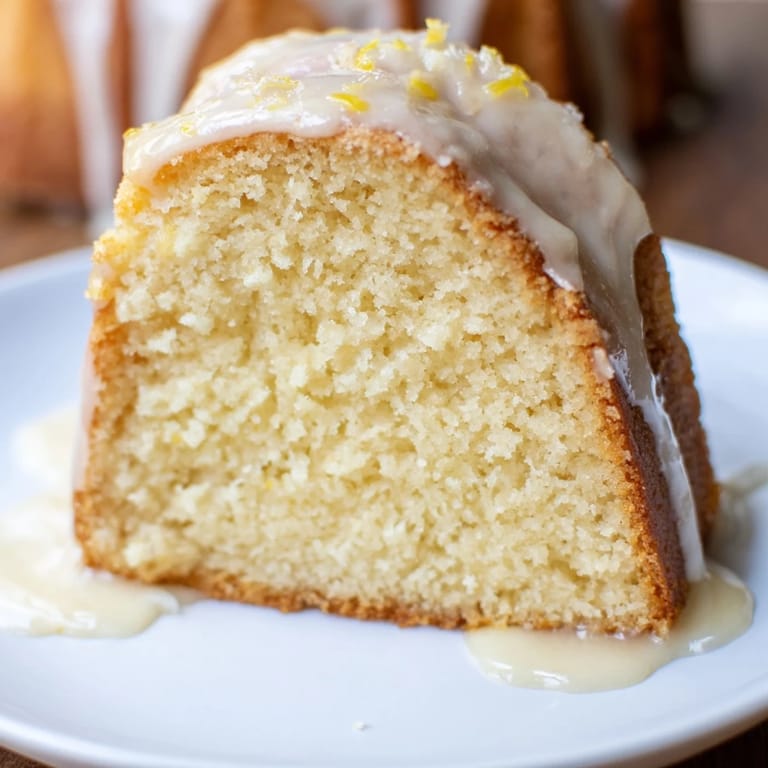
- Whisk powdered sugar and lemon juice until smooth and drizzle it over the cooled cake, letting it pool slightly on top. Allow it to set for at least 30 minutes before slicing so it firms up beautifully.
 Save
Save Years later, I still think about the quiet moment when my daughter asked if we could make this cake together for the first time. Watching her crack eggs (badly), grate lemon zest (everywhere), and finally taste what we made together—that's when I realized this recipe was never really about the cake at all.
The Science of Pound Cake
A pound cake gets its name from the original ratio of one pound each of butter, sugar, eggs, and flour. What makes this version work is the proportion of lemon juice and zest, which adds moisture and flavor without throwing off the delicate balance. The milk acts as a buffer, keeping the cake tender despite the eggs and butter, and the baking powder lifts it just enough so it's not a brick but still has that signature dense crumb that makes it feel substantial and real.
Serving and Storage
This cake is best sliced thick and served with tea or coffee, or alongside fresh berries if you want to make it feel fancier. It actually improves after a day or two as the flavors meld and the crumb becomes even more tender, so don't feel rushed to eat it all immediately. Wrap it tightly in plastic wrap and it'll keep at room temperature for up to three days, or freeze it unwrapped for up to two months.
Customizing Your Cake
Once you've made this cake once or twice, you'll feel confident enough to play with it. If you're a lemon fanatic like I am, add 1/2 teaspoon of lemon extract to the batter for an extra floral note, or brush the cooled cake with lemon simple syrup before glazing. You could also swap out half the all-purpose flour for almond flour for a slightly different texture, or dust the top with candied lemon slices before serving.
- Make a simple syrup by heating equal parts sugar and lemon juice with a splash of water, then brush it on the warm cake for extra moisture and flavor.
- Toast the lemon zest lightly in a dry skillet before adding it to the batter if you want a more concentrated, almost caramelized lemon note.
- If your cake domes too much on top, level it with a serrated knife before glazing for a prettier presentation.
 Save
Save This cake has a way of becoming part of your routine, the one you reach for when you want to show up for someone or just make your kitchen smell like contentment. It's simple, it's honest, and it works every single time.
Recipe FAQs
- → What gives the cake its lemon flavor?
Freshly grated lemon zest and fresh lemon juice are mixed into the batter, providing a bright citrus aroma and flavor throughout the cake.
- → How should I avoid overmixing the batter?
Add the flour mixture in small portions alternating with the lemon milk blend, mixing just until combined to maintain a tender crumb.
- → Can I use a different pan size?
A 9x5-inch loaf pan is recommended for even baking and shape, but similar-sized pans may work with adjusted baking times.
- → How is the lemon glaze made?
A simple glaze made from powdered sugar and fresh lemon juice is whisked until smooth and poured over the cooled cake for tangy sweetness.
- → How do I store the cake properly?
Wrap the cooled cake tightly and store at room temperature for up to three days to preserve moisture and freshness.