 Save
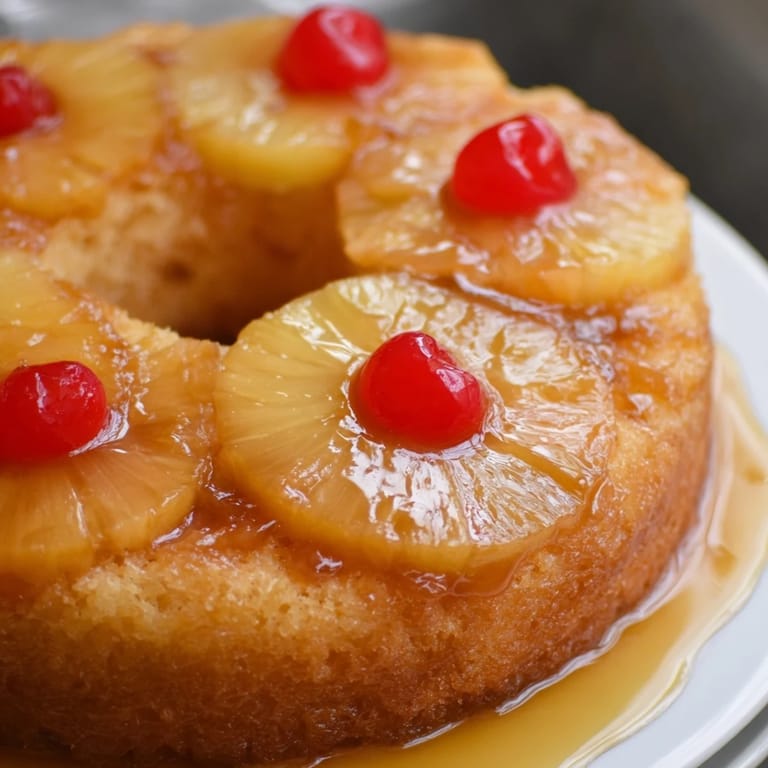
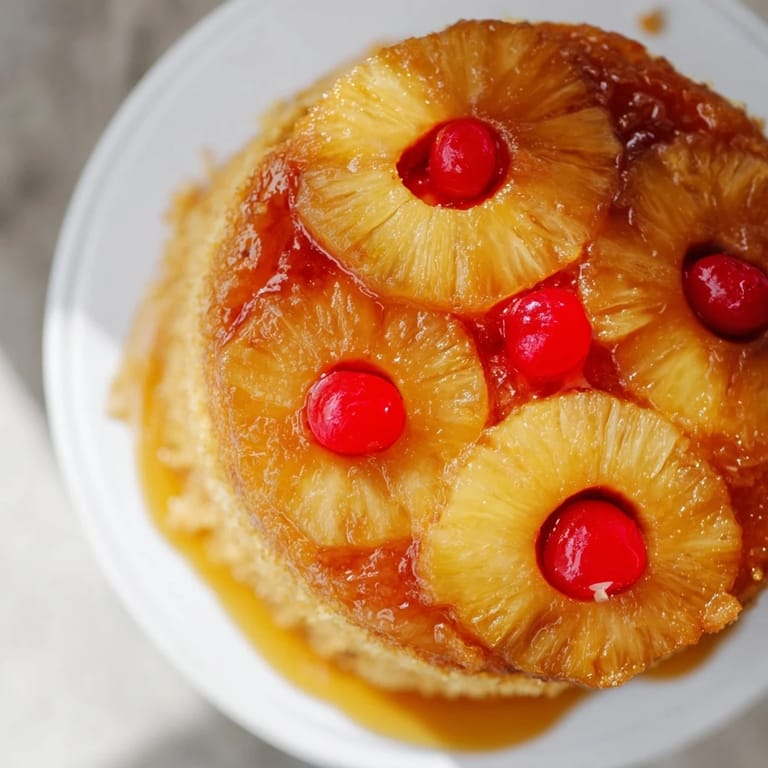
Save My aunt pulled this cake out of the oven one summer afternoon, and the kitchen filled with a smell so golden it seemed to have a color. The butter and brown sugar had caramelized into this amber glaze at the bottom of the pan, and when she flipped it over onto a plate, the pineapple rings caught the light like stained glass. I watched her slide a cherry into the center of each ring with the precision of someone who'd done this a hundred times, and I understood then why this cake had survived decades of recipe collections—it's not just dessert, it's a small magic trick you can do with an oven.
I made this for a potluck once and brought it to the table still warm, the butter glossy and the pineapple practically glowing. Someone's kid asked if it was real or if we'd made it in a factory, and the whole table laughed. That's when I realized this cake isn't just about taste—it's about the moment when you set it down and people actually stop talking.
Ingredients
- Unsalted butter (for topping and cake): Room temperature butter creams into the batter like silk, while the topping butter melts into a rich base for the brown sugar to caramelize against—this difference matters more than you'd think.
- Light brown sugar (for topping): The molasses in brown sugar creates that deeper, almost butterscotch notes in the glaze; don't substitute with white sugar or you'll lose the whole character.
- Canned pineapple rings: Use the kind packed in juice, not syrup, and drain them well so excess liquid doesn't make your cake soggy.
- Maraschino cherries: Yes, they're a little kitschy, but they're also the punctuation mark that makes this cake instantly recognizable.
- Granulated sugar (for cake): This sweetens the actual cake, which needs to be mild enough to let the caramelized topping be the star.
- Large eggs: Room temperature eggs blend into the butter more smoothly, giving the cake a tender crumb.
- Vanilla extract: A teaspoon does the work quietly, adding depth without announcing itself.
- All-purpose flour: The structure of the cake depends on this, so don't skip sifting if your flour has been sitting around.
- Baking powder: This gives the cake its gentle rise—not too much, just enough lift to stay tender.
- Whole milk: The dairy tenderizes the crumb and helps the flour blend smoothly into the butter mixture.
Tired of Takeout? 🥡
Get 10 meals you can make faster than delivery arrives. Seriously.
One email. No spam. Unsubscribe anytime.
Instructions
- Heat the oven and prepare:
- Preheat to 175°C (350°F) and grease your 23-cm round pan thoroughly, getting into the corners. This matters because the caramelized bottom is delicate and needs nothing to stick to it.
- Build the caramel base:
- Melt the 60 g of butter in the pan, then sprinkle the brown sugar evenly over it. You'll want an even layer so every slice gets that butterscotch glaze, so use the back of a spoon to distribute it if needed.
- Arrange the fruit:
- Lay the pineapple rings across the sugar mixture like you're composing something beautiful, because you are. Tuck a cherry into the center of each ring, and don't rush this step—it's the part people will actually see.
- Cream the butter and sugar:
- Beat the softened 120 g butter with the granulated sugar until it's pale and fluffy, about three to four minutes with an electric mixer. This step aerates the batter so the cake stays tender rather than dense.
- Incorporate the eggs and vanilla:
- Add eggs one at a time, beating well between each one so they fully blend in. The mixture should look smooth and slightly glossy, then add the vanilla and beat for just a few seconds.
- Combine the dry ingredients:
- In a separate bowl, whisk together the flour, baking powder, and salt. This distributes the leavening evenly so you get an even rise.
- Alternate wet and dry:
- Add the flour mixture and milk to the butter mixture in three additions, starting and ending with flour. Mix on low speed or by hand just until combined—overmixing toughens the cake, and you want it tender.
- Spread over the pineapple:
- Spoon the batter evenly over the fruit and smooth the top gently with a spatula. The batter will be thick but spreadable, and you're creating a seal between the fruit and the heat.
- Bake to golden:
- Bake for 38 to 42 minutes, until a toothpick inserted into the cake (not touching fruit) comes out clean. The kitchen will smell like butter and caramel, and you'll want to pull it out early—don't.
- Cool and flip:
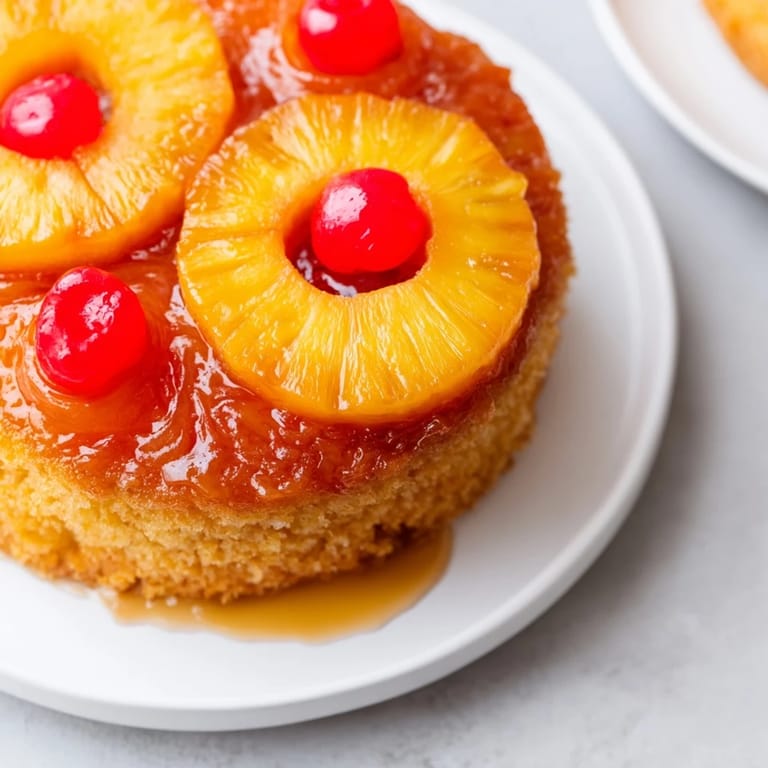
- Let the cake rest in the pan for 10 minutes (this sets the structure slightly), then run a thin knife around the edge and invert it onto a serving plate in one confident motion. The caramel and pineapple will stay stuck to the bottom of the cake, forming the beautiful top.
 Save
Save There's a moment when you flip this cake and it works perfectly, when the pineapple stays exactly where you arranged it and the caramel catches the light—in that moment, you understand why people have made this cake for generations. It's not complicated, but it feels like accomplishment.
Why This Cake Endures
Upside-down cakes became popular in the 1920s when canned pineapple made tropical fruit accessible to home bakers everywhere. What's remarkable is that this cake hasn't changed much since—not because nobody tried, but because the combination of caramelized butter, sweet fruit, and tender cake is already perfect. It's a recipe that proves you don't need complexity to impress.
Serving and Storage
Serve this cake warm or at room temperature, though it's honestly better warm when the caramel is still soft. A dollop of whipped cream or a scoop of vanilla ice cream on the side turns a good cake into the kind of dessert people remember. Store leftovers covered at room temperature for up to two days, though it rarely lasts that long once people know it's in the kitchen.
Small Variations That Change Everything
Once you understand this cake, you can play with it gently. Some people brush the pineapple with a tablespoon or two of the juice before baking to intensify the tropical flavor, or they swap the cherries for toasted pecans for a different kind of elegance. I've even seen versions with a touch of rum in the batter or a sprinkle of cinnamon in the dry ingredients—changes that feel like adding a new verse to a familiar song rather than writing something entirely different.
- Add 1 to 2 tablespoons of pineapple juice to the batter if you want the tropical flavor to shine through more boldly.
- Substitute fresh pineapple if you prefer, though it won't caramelize quite the same way—canned is actually the more reliable choice here.
- Try pecans instead of cherries if you want the cake to feel a little less retro and a little more sophisticated.
 Save
Save This cake is proof that some recipes don't need updating because they already do exactly what they're supposed to do. Make it, flip it, and watch people's faces.
Recipe FAQs
- → How do I prevent sticking when inverting the cake?
Ensure the pan is well greased before adding the butter and sugar; letting the caramel cool slightly before adding the batter helps too.
- → Can fresh pineapple be used instead of canned?
Yes, fresh pineapple slices can be substituted for a brighter flavor, but drying them slightly helps reduce excess moisture.
- → What is the best way to achieve caramelized pineapple topping?
Melting butter with packed brown sugar forms a caramel base; arranging pineapple rings on top before pouring batter allows caramelization during baking.
- → How long should the cake cool before inverting?
Allow the cake to cool in the pan for about 10 minutes to set the topping without sticking, making inversion easier.
- → Are there flavor variations to try with this cake?
Adding pineapple juice to the batter or swapping cherries for pecans offers delightful twists that enhance the dessert’s profile.