 Save
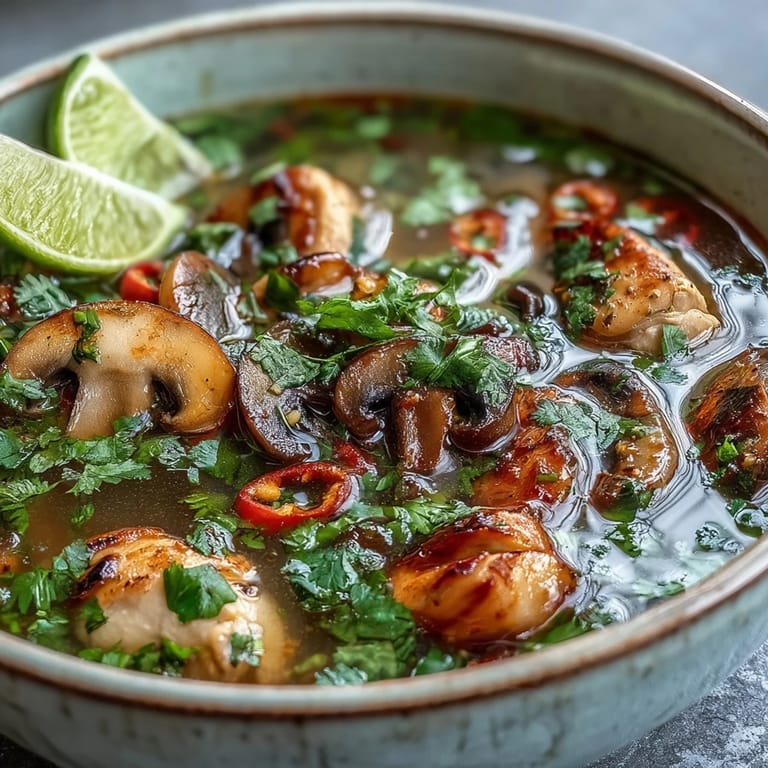
Save I remember the steam from the first pot of Tom Yum Gai I tried to make in my tiny studio apartment. The fragrance of lemongrass and galangal immediately filled the cramped space making it feel like a tropical getaway. I had no idea how much power those small Thai chiles held until I took that first fiery sip. It was a chaotic mess of flavors that somehow made perfect sense. Now every time I smell that citrusy broth I am transported back to that small kitchen where I learned to balance heat and soul.
I once made this for a group of friends on a rainy Tuesday and we ended up sitting on the floor passing the pot around. We spent more time talking about the zing of the lime juice than the actual movie we were supposed to watch. It is one of those dishes that demands your attention and sparks conversation.
Ingredients
- Chicken: I prefer thighs for their juicy texture but breast works if you slice it very thin against the grain.
- Chicken Stock: This is the foundation of your soup so use a high quality one or homemade if you have it.
- Lemongrass: Smashing these stalks releases the essential oils that give the soup its signature perfume.
- Kaffir Lime Leaves: Tearing these by hand releases a citrus aroma that simply cannot be replicated by zest alone.
- Galangal: This root provides a sharp peppery bite that is much more floral than standard ginger.
- Thai Birds Eye Chiles: These tiny powerhouses provide a clean heat that builds slowly with every spoonful.
- Oyster Mushrooms: These act like little sponges that soak up the spicy and sour broth perfectly.
- Tomatoes: The wedges add a subtle sweetness and a beautiful pop of color to the bowl.
- Onion: Slicing them thin ensures they soften just enough to add texture without overpowering the broth.
- Nam Prik Pao: This roasted chili paste is the secret to that smoky rich orange hue.
- Fish Sauce: It provides the essential salty funk that balances out the lime and sugar.
- Sugar: A tiny bit of sweetness is necessary to round out the intense acidity of the lime.
- Salt: This helps to sharpen the other flavors without making the dish overly salty.
- Lime Juice: Always squeeze this fresh at the very end to keep the flavor vibrant and bright.
- Cilantro: These fresh green leaves add a cooling finish to the spicy broth.
Tired of Takeout? 🥡
Get 10 meals you can make faster than delivery arrives. Seriously.
One email. No spam. Unsubscribe anytime.
Instructions
- Infuse the base:
- Watch as the stock transforms into an aromatic elixir when the lemongrass and galangal hit the boiling water.
- Poach the chicken:
- Gently drop the chicken slices into the bubbling broth and wait for them to turn opaque and tender.
- Wilt the vegetables:
- Add the mushrooms and tomatoes and let them soften until they look glossy and inviting.
- Season the broth:
- Stir in the chili paste and fish sauce until the soup turns a deep and beautiful sunset orange.
- Finish with citrus:
- Turn off the heat before adding the lime juice to preserve its electric zing and fresh scent.
- Garnish and serve:
- Ladle the steaming soup into bowls and sprinkle cilantro over the top for a fresh finish.
 Save
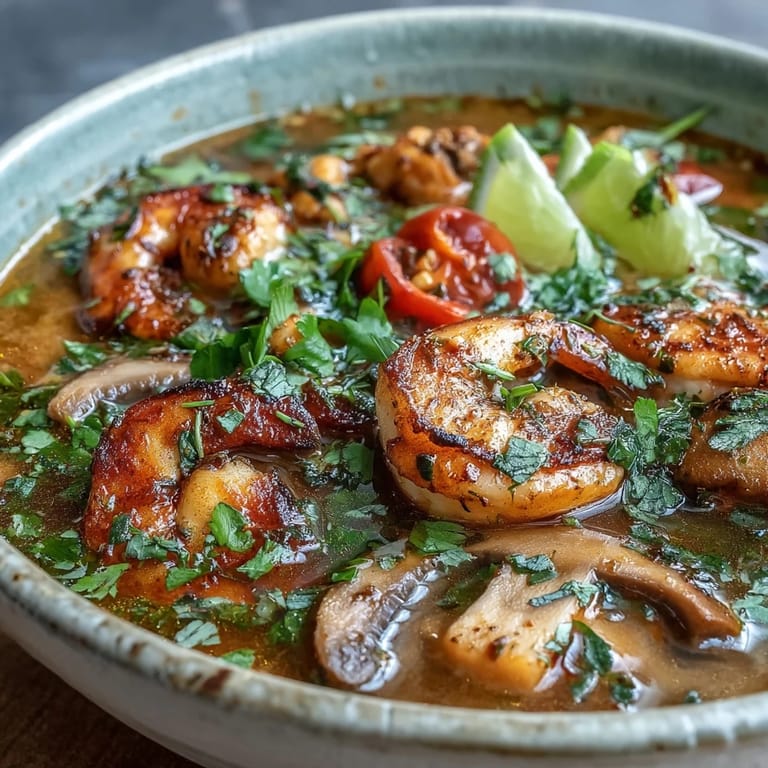
Save I learned that the hard way when I served a whole piece of galangal to a guest who thought it was a potato. We both had a good laugh once the coughing stopped and the water glasses were refilled.
The Art of Balance
Getting the right ratio of sour to salty is a personal journey that changes every time I cook. I usually start with less fish sauce and add more after the lime juice has had its say. It is about trusting your palate more than the measuring spoons on your counter.
Sourcing the Essentials
Finding fresh kaffir lime leaves can feel like a treasure hunt at the local Asian market. I often buy a large bag and keep them in the freezer so I can make this soup on a whim. Frozen leaves retain their oils remarkably well and are much better than the dried versions.
Customizing the Heat
Some days require a gentle warmth while others call for a full spicy reset of the senses. You can control the fire by how much you smash those little chiles before they go into the pot.
- Leaving the chiles whole provides a very mild heat that is barely noticeable.
- Removing the seeds from the chiles will give you the flavor without the intense burn.
- For a creamy version stir in a splash of evaporated milk right at the very end.
 Save
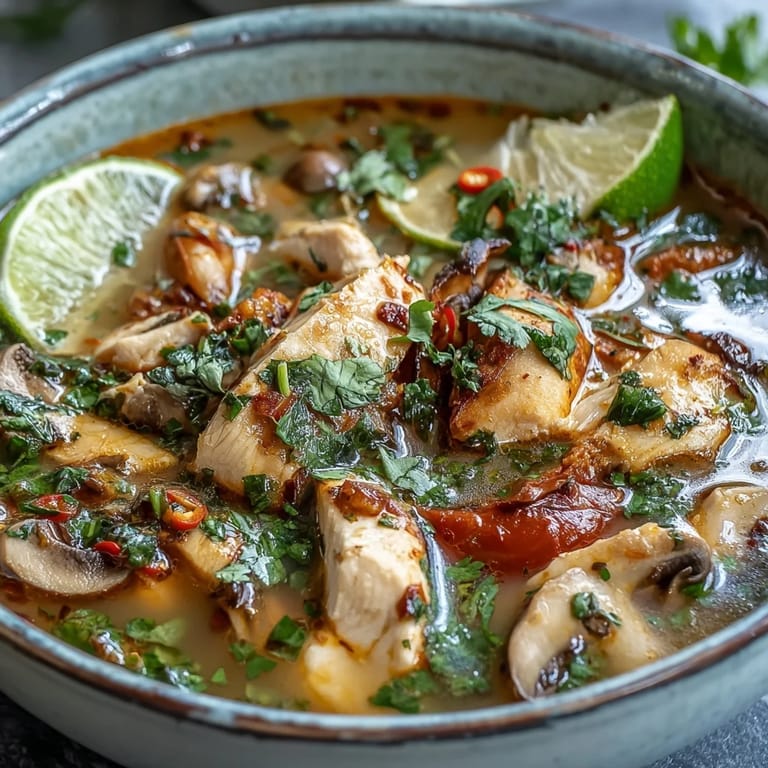
Save This soup is a vibrant reminder that the simplest ingredients can create the most complex experiences. I hope it brings as much warmth to your table as it does to mine.
Recipe FAQs
- → What makes Tom Yum Gai different from other Thai soups?
Tom Yum Gai features a distinctive spicy-sour profile from fresh lime juice, Thai chiles, and aromatic herbs like lemongrass, galangal, and kaffir lime leaves. The nam prik pao adds deep roasted flavor and richness.
- → Can I adjust the spice level?
Yes, reduce Thai chiles to 1 or omit entirely for mild heat. Add more chiles or include seeds for extra spiciness. Taste the broth as you go to find your perfect balance.
- → What's the best substitute for galangal?
Fresh ginger works as a substitute, though it lacks galangal's piney, citrusy notes. Use slightly more ginger and add extra lemongrass to compensate for flavor differences.
- → Can I make this ahead of time?
The broth base can be prepared 1-2 days ahead and refrigerated. Add fresh vegetables and chicken when reheating, and finish with lime juice just before serving for the brightest flavor.
- → Is nam prik pao essential?
While traditional, you can omit it for a lighter version. The soup will still be delicious, though you might want to add an extra Thai chile or more fish sauce to maintain depth.
- → What protein alternatives work well?
Shrimp makes Tom Yum Goong, or use tofu for a vegetarian version. Adjust cooking time accordingly—shrimp needs only 2-3 minutes, while tofu can simmer longer to absorb flavors.